
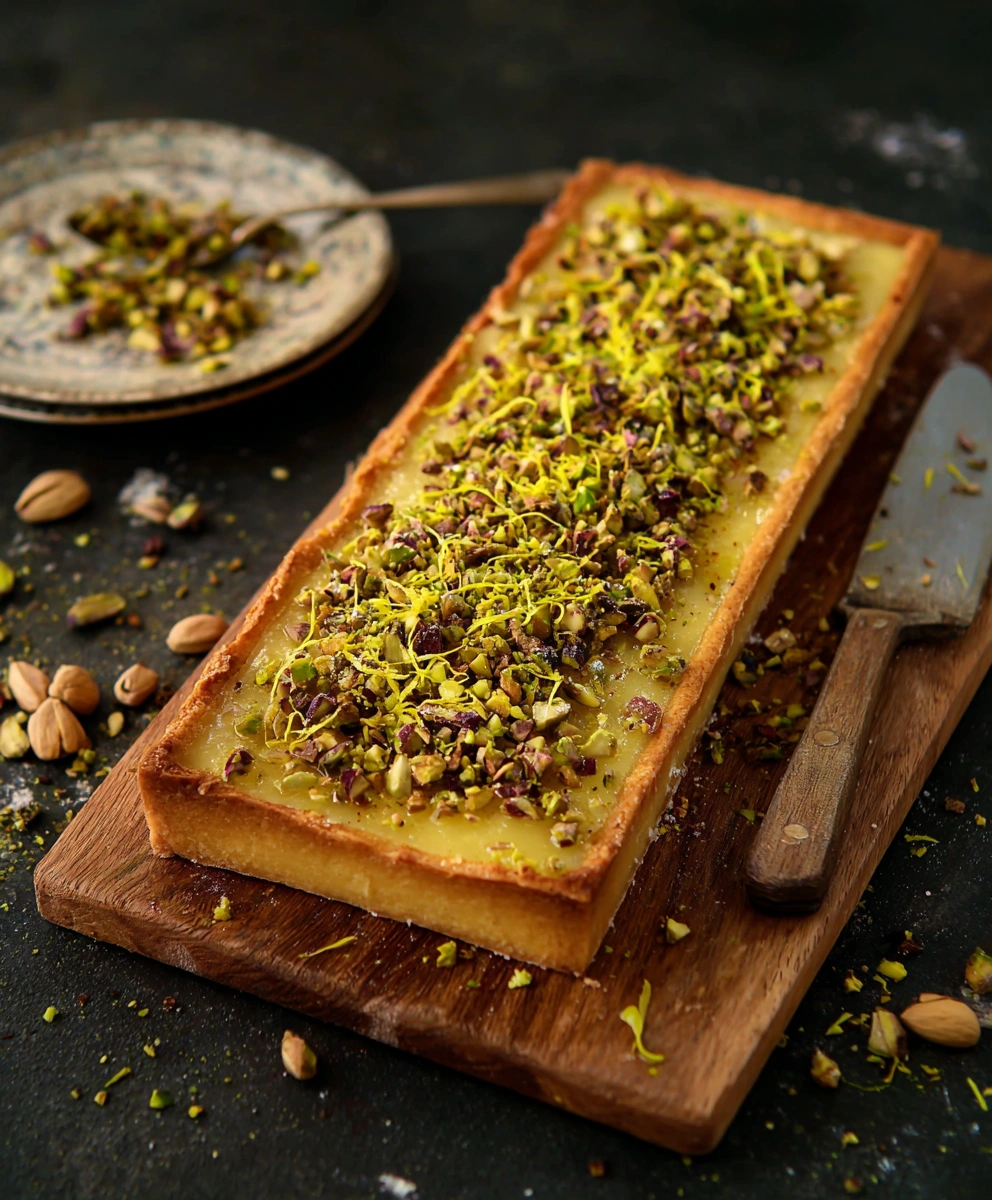
The Lemon Halva Tart is a refreshing twist on the traditional lemon tart, infused with the nutty, sweet richness of Middle Eastern halva. This dessert is where tangy citrus meets sesame sweetness, all wrapped up in a crisp, buttery tart shell. It’s both familiar and exotic, making it a show-stopper for spring gatherings, weekend baking, or special celebrations.
Why You’ll Love This Tart
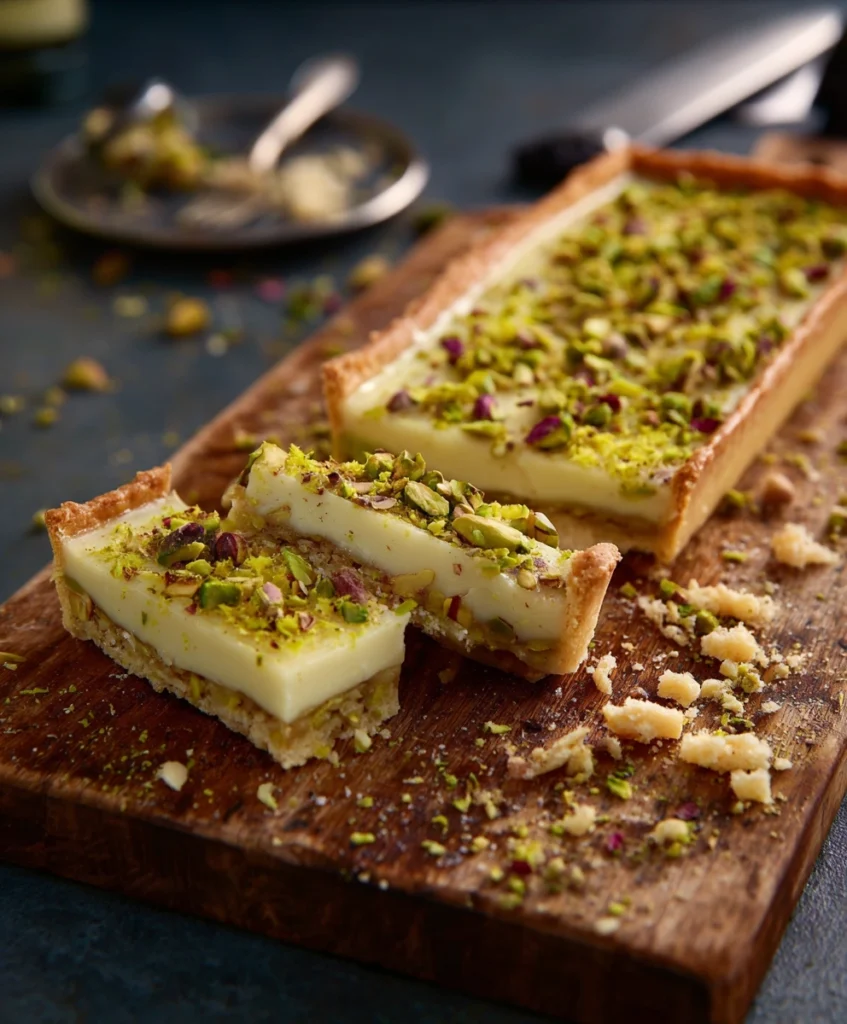
What makes this tart special is its beautiful contrast. The lemon adds brightness and acidity, while the halva contributes a deep, almost caramel-like nuttiness. The combination is unexpected but totally harmonious. Add in a buttery crust and, optionally, a layer of pistachio paste, and you’ve got a dessert that’s creamy, crunchy, sweet, and tart—all at once.
It’s an elegant dessert that feels fancy but is surprisingly easy to make with a few good ingredients.
Ingredients
For the crust:
- 1 ¼ cups (160g) all-purpose flour
- ½ cup (115g) unsalted butter, cold and cubed
- ¼ cup (30g) powdered sugar
- 1 egg yolk
- 1–2 tablespoons cold water (as needed)
- Pinch of salt
Optional pistachio layer:
- 3 tablespoons pistachio paste or spread
For the lemon-halva filling:
- 200g halva, crumbled (preferably sesame-based)
- ½ cup (120ml) freshly squeezed lemon juice
- Zest of 1 lemon
- 3 large eggs
- ⅓ cup (70g) granulated sugar
- ⅓ cup (80ml) heavy cream
- 1 tablespoon all-purpose flour (optional, for thicker texture)
To decorate (optional):
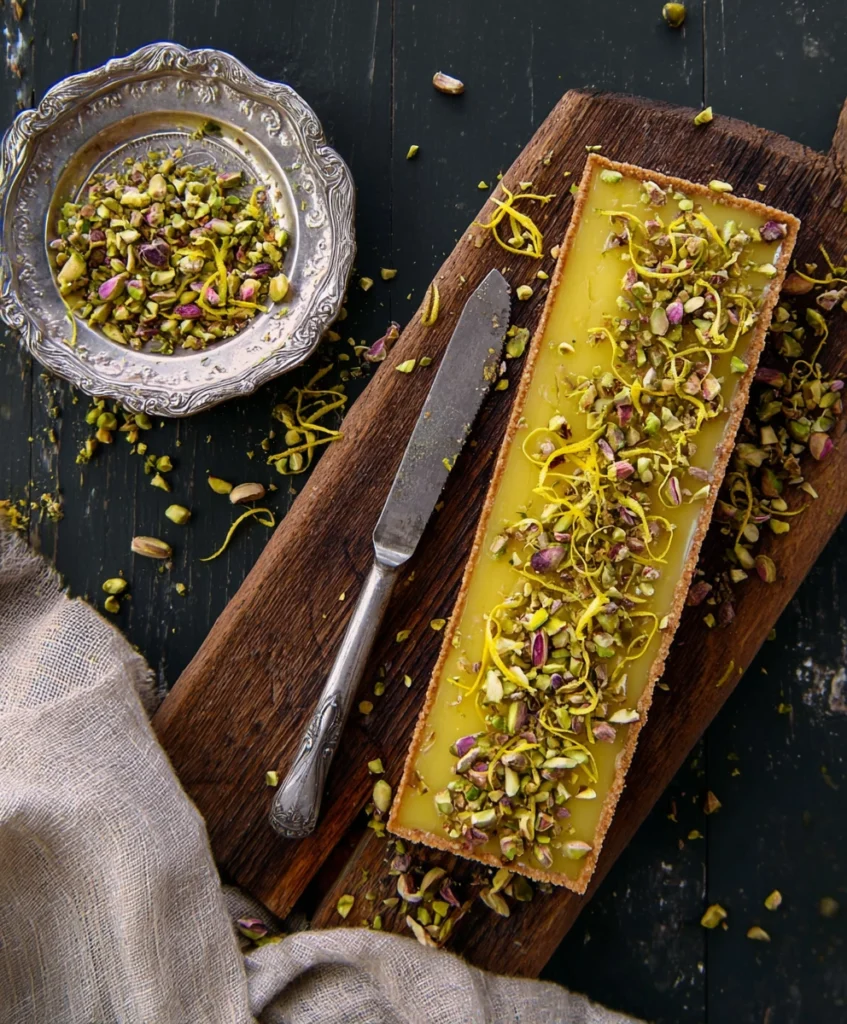
- Chopped pistachios
- Lemon zest or candied lemon peel
- Edible flowers or rose petals (for presentation)
Step-by-Step Instructions
1. Prepare the tart crust:
- In a food processor (or by hand), blend the flour, powdered sugar, and salt.
- Add the cold butter and pulse until the mixture resembles coarse crumbs.
- Add the egg yolk and a tablespoon of cold water. Pulse until the dough starts coming together. Add a little more water if needed.
- Form the dough into a disc, wrap it in plastic wrap, and chill for at least 30 minutes.
2. Blind bake the crust:
- Preheat the oven to 350°F (175°C).
- Roll out the chilled dough on a lightly floured surface to fit a 9-inch (23 cm) tart pan.
- Press it into the pan and trim the edges. Prick the base with a fork.
- Line the crust with parchment paper and fill with pie weights or dry beans.
- Bake for 15 minutes, remove weights and paper, then bake for another 5–8 minutes until lightly golden.
- Let the crust cool completely.
3. Optional: Add a pistachio layer
- Spread a thin layer of pistachio paste over the cooled crust.
- Place the crust in the fridge while you make the filling.
4. Make the lemon-halva filling:
- In a bowl, whisk together the eggs, lemon juice, lemon zest, sugar, and heavy cream.
- Crumble in the halva and mix until mostly smooth (some texture is fine).
- Optional: Stir in 1 tablespoon of flour if you want a firmer filling.
5. Assemble and bake:
- Pour the filling into the tart shell over the pistachio layer.
- Bake at 325°F (160°C) for 25–30 minutes, or until the center is just set and has a slight wobble.
- Let cool at room temperature, then chill in the fridge for at least 2 hours.
6. Decorate and serve:
- Before serving, garnish with chopped pistachios, fresh lemon zest, or candied lemon slices.
- Slice and serve cold or slightly chilled.
Serving Tips & Variations
- Serve with: Turkish coffee or mint tea to complement the Middle Eastern notes.
- Make it gluten-free: Use a gluten-free flour blend for the crust and omit the optional flour in the filling.
- Dairy-free option: Replace butter with vegan butter and use full-fat coconut milk instead of cream.
- Extra zesty: Add more lemon zest to the filling for a sharper citrus kick.
Final Thoughts
The Lemon Halva Tart is more than just a twist on a classic—it’s a celebration of cross-cultural flavors. The richness of halva balances the brightness of lemon, creating a dessert that feels both traditional and totally new. It’s a tart that brings together the best of both worlds: the sophistication of a French-style tart and the deep, nostalgic sweetness of Middle Eastern halva.