
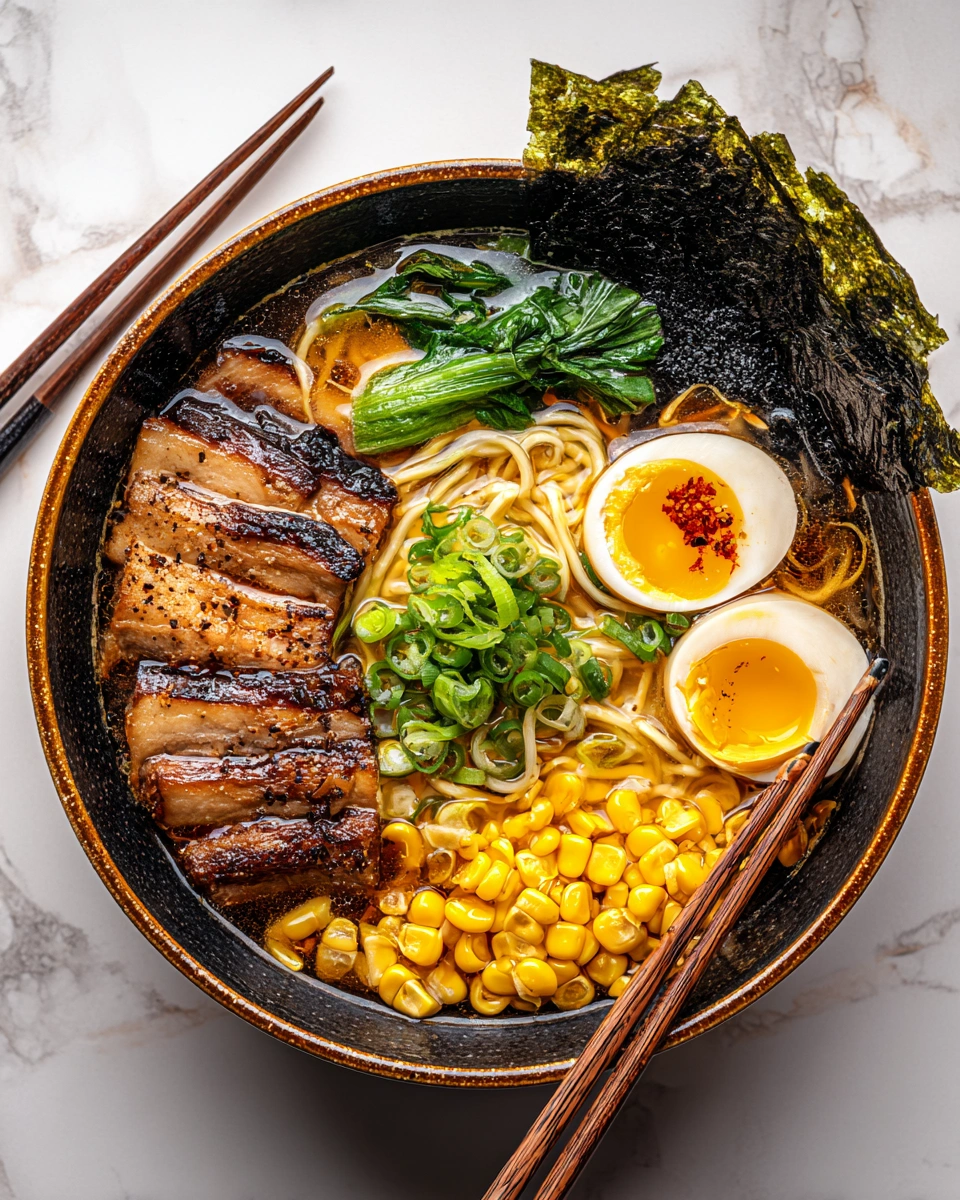
If you love comforting noodle soups, miso ramen is one of the most flavorful Japanese dishes you can make at home. This rich and aromatic bowl features ramen noodles in a savory broth flavored with miso paste, garlic, ginger, and sesame oil, topped with vegetables and soft-boiled eggs.
Originally from Hokkaido in northern Japan, miso ramen is known for its bold, umami-rich broth made with fermented soybean paste. This ingredient gives the soup its signature deep flavor and slightly creamy texture.
Traditional versions sometimes include pork or pork broth, but this recipe uses chicken broth or vegetable broth, making it lighter while still incredibly satisfying.
Whether you’re cooking for a cozy dinner or craving authentic Japanese comfort food, this homemade miso ramen recipe is simple, delicious, and ready in about 30 minutes.
What Is Miso Ramen?
Miso ramen is a Japanese noodle soup made with ramen noodles served in a broth seasoned with miso paste (fermented soybean paste), which adds richness and a deep umami flavor.
A typical bowl contains three main components:
- Broth – usually chicken, pork, or vegetable stock flavored with miso.
- Noodles – wheat ramen noodles made with kansui alkaline water.
- Toppings – eggs, vegetables, corn, seaweed, mushrooms, or meat.
The result is a hearty soup that is both warming and incredibly satisfying.
Ingredients for Miso Ramen (No Pork)
For the Broth
- 4 cups chicken broth or vegetable broth
- 3 tablespoons miso paste (white or red)
- 1 tablespoon sesame oil
- 2 cloves garlic, minced
- 1 teaspoon fresh ginger, grated
- 1 small shallot or onion, chopped
- 1 teaspoon chili bean paste (optional)
- 1 tablespoon soy sauce
- 1 tablespoon sake (optional)
- 1 teaspoon sugar
- ¼ teaspoon white pepper
These ingredients are inspired by classic ramen broth bases that combine miso with aromatics such as garlic, ginger, sesame oil, and stock.
For the Noodles
- 2 portions fresh ramen noodles
Ramen noodles are traditionally made with wheat flour, water, salt, and kansui, which gives them their distinctive elasticity and texture.
Toppings
Choose your favorites:
- Soft-boiled ramen eggs
- Sweet corn kernels
- Sautéed mushrooms
- Baby spinach or bok choy
- Green onions
- Nori seaweed
- Toasted sesame seeds
- Tofu cubes or grilled chicken slices
Vegetables such as mushrooms, spinach, and corn are common toppings in many modern miso ramen variations.
How to Make Miso Ramen
Step 1: Prepare the Aromatic Base
Heat the sesame oil in a large pot over medium heat.
Add:
- garlic
- ginger
- chopped onion
Sauté for about 2 minutes until fragrant.
If using chili bean paste, add it now and stir well.
Step 2: Make the Broth
Pour in the chicken or vegetable broth.
Add:
- soy sauce
- sugar
- white pepper
- sake (optional)
Bring the broth to a gentle simmer.
In a small bowl, mix the miso paste with a little hot broth until smooth, then add it back to the pot. This prevents clumping.
Let the soup simmer for 5–7 minutes so the flavors develop.
Step 3: Cook the Ramen Noodles
Bring a separate pot of water to a boil.
Cook the ramen noodles according to the package instructions (usually 2–3 minutes) until just tender.
Drain well so the cooking water does not dilute the soup.
Step 4: Prepare the Toppings
While the noodles cook:
- Soft-boil the eggs (about 6–7 minutes).
- Sauté mushrooms in a little oil.
- Chop green onions.
Prepare all toppings before assembling the ramen bowl.
Step 5: Assemble the Bowl
Divide the cooked noodles into two large bowls.
Ladle the hot miso broth over the noodles.
Add toppings such as:
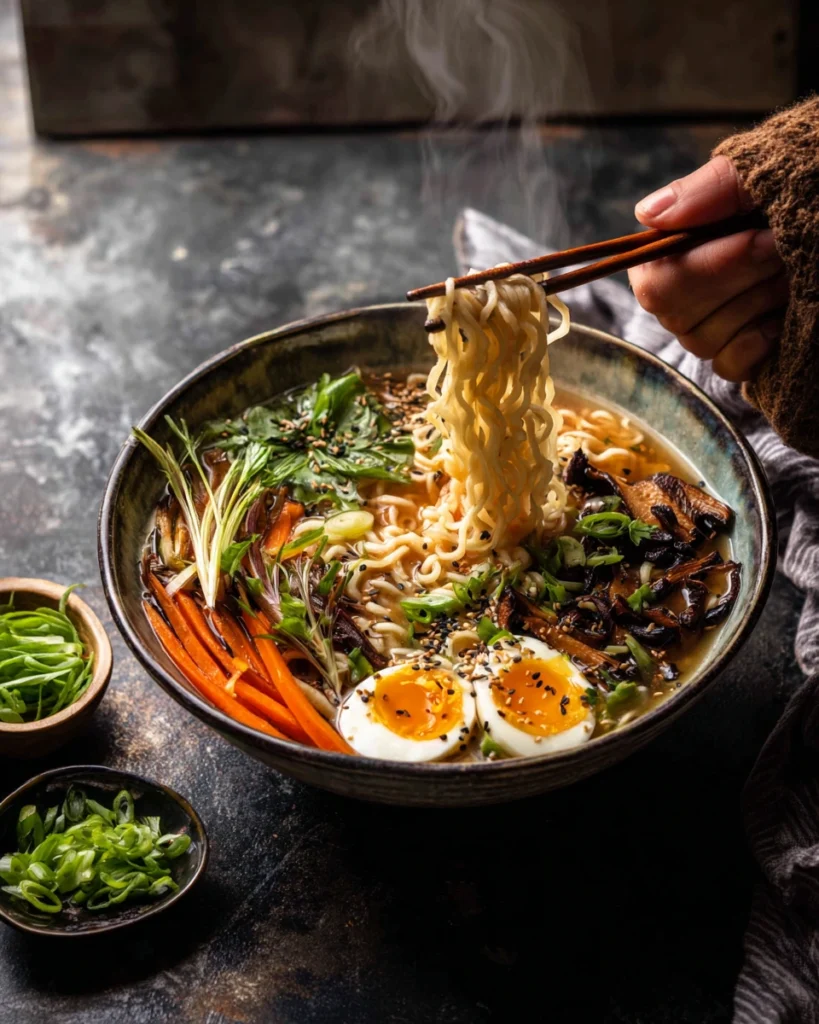
- mushrooms
- spinach or bok choy
- corn
- soft-boiled egg
- nori
- green onions
Finish with a sprinkle of toasted sesame seeds.
Serve immediately and enjoy!
Tips for the Best Miso Ramen
1. Use Good Quality Miso
Different miso types give different flavors.
- White miso – mild and slightly sweet
- Red miso – stronger and deeper
Mixing both can create a balanced broth.
2. Add Umami Ingredients
For deeper flavor, try adding:
- kombu seaweed
- dried mushrooms
- soy sauce
- chili oil
These ingredients enhance the savory taste of the soup.
3. Don’t Overcook the Noodles
Ramen noodles cook very quickly and should remain slightly firm.
Variations of Miso Ramen
Vegetarian Miso Ramen
Use vegetable broth and add tofu, mushrooms, and soy milk for creaminess.
Spicy Miso Ramen
Add chili paste or chili oil for extra heat.
Chicken Miso Ramen
Top the ramen with grilled chicken slices instead of pork.
What to Serve with Miso Ramen
Miso ramen can be served with:
- Japanese gyoza dumplings
- Edamame
- Pickled vegetables
- Japanese cucumber salad
These side dishes make the meal feel like a full ramen shop experience.
Why Miso Ramen Is So Popular
Miso ramen is loved worldwide because of its rich umami flavor and comforting warmth. The fermented soybean paste adds a depth of flavor that makes the broth incredibly satisfying, especially in colder seasons.
It is also a very flexible dish—easy to adapt with different proteins, vegetables, or even vegetarian ingredients.