
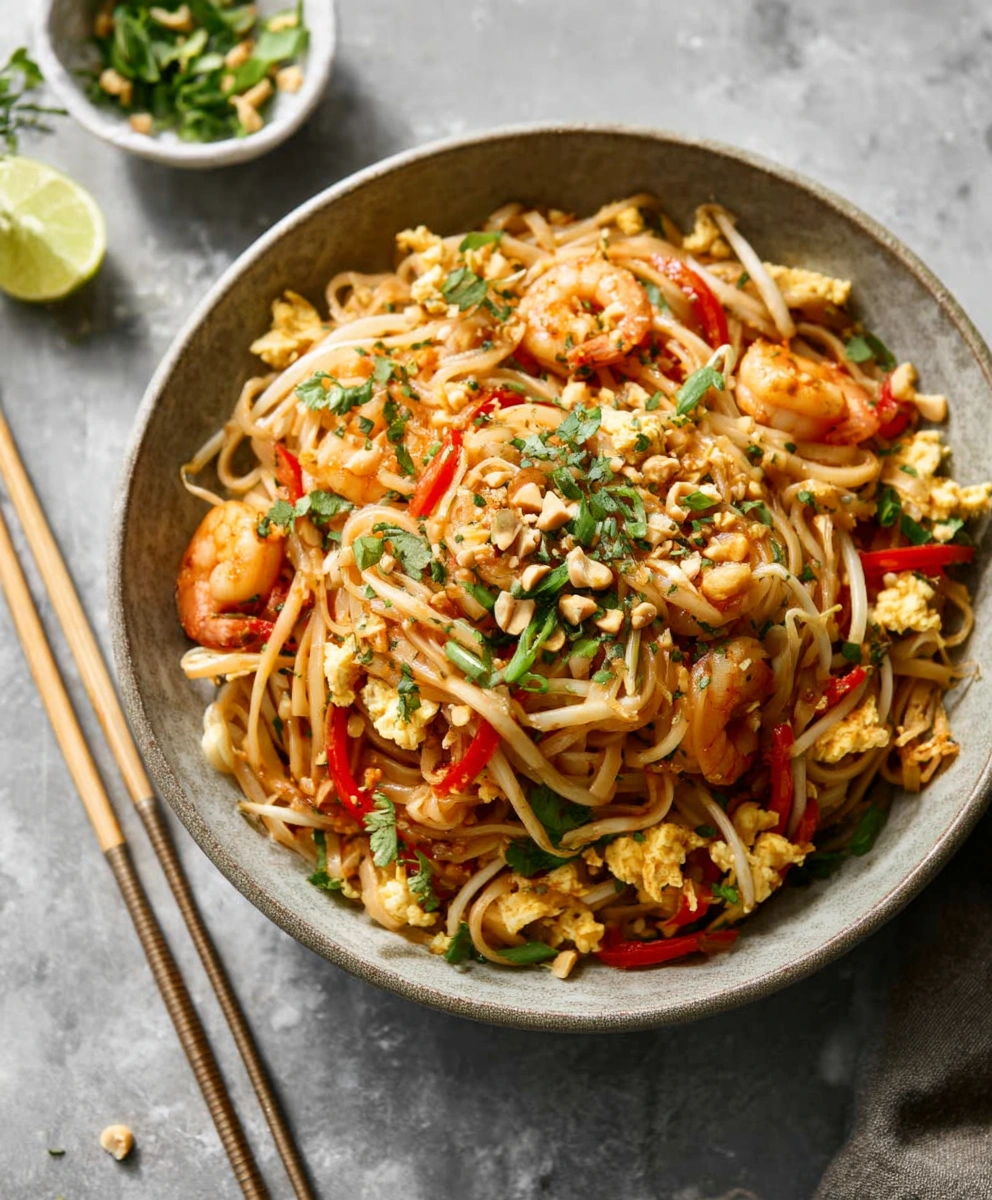
Pad Thai is one of the most popular Thai dishes in the world, loved for its perfect balance of sweet, savory, tangy, and slightly spicy flavors. This iconic street-food classic combines rice noodles, protein, vegetables, and a flavorful sauce, creating a quick yet satisfying meal that can easily be made at home.
Whether you enjoy shrimp, chicken, tofu, or a vegetarian version, Pad Thai is a versatile dish that adapts to many tastes while keeping its authentic character.
What Is Pad Thai?
Pad Thai is a traditional Thai stir-fried noodle dish typically made with flat rice noodles, eggs, bean sprouts, peanuts, and a choice of protein such as shrimp, chicken, or tofu. Everything is cooked quickly in a hot wok and tossed with a flavorful sauce that combines salty, sweet, and acidic elements.
It’s widely recognized as one of Thailand’s most famous street foods and a staple in Thai restaurants around the world.
Why Pad Thai Is So Popular
One of the main reasons Pad Thai is loved globally is its balance of textures and flavors. Soft noodles, crunchy peanuts, fresh vegetables, and tender protein come together in one dish. Many home cooks also appreciate that it can be prepared quickly — often in about 30 minutes — making it ideal for busy weeknights.
Pad Thai is also highly customizable, allowing you to adjust spice levels, swap proteins, or create vegan and gluten-free variations.
Key Ingredients for Pad Thai
The magic of Pad Thai comes from combining fresh ingredients with a well-balanced sauce.
Noodles and Protein
- Flat rice noodles
- Shrimp, chicken, or tofu
- Eggs
Vegetables and Garnishes
- Bean sprouts
- Green onions
- Red bell peppers
- Lime wedges
- Fresh cilantro
Crunchy Elements
- Roasted peanuts
These ingredients are commonly used in modern homemade recipes and help recreate the authentic flavors of restaurant-style Pad Thai.
The Secret Behind Pad Thai Sauce
The sauce is what truly defines the dish. Traditional Pad Thai sauce combines salty fish sauce, sugar, vinegar or tamarind paste, and chili for heat. Some modern recipes also add peanut butter to create a richer and creamier texture.
The goal is to achieve a harmonious flavor profile:
- Sweet from sugar
- Salty from fish sauce or soy sauce
- Tangy from tamarind or vinegar
- Spicy from chili sauce
How to Make Pad Thai at Home
1. Cook the Noodles
Prepare rice noodles according to the package instructions until just tender. Rinse with cold water to prevent sticking.
2. Prepare the Sauce
In a bowl, mix fish sauce, soy sauce, brown sugar, vinegar or tamarind paste, and chili sauce. Set aside.
3. Stir-Fry the Protein
Heat oil in a wok or large pan. Add garlic, protein of choice, and sliced vegetables. Cook until the protein is done.
4. Scramble the Eggs
Push the ingredients to one side of the pan and scramble the eggs separately before mixing them in.
5. Combine Everything
Add noodles, sauce, bean sprouts, and peanuts. Toss well until evenly coated.
6. Garnish and Serve
Top with chopped green onions, extra peanuts, cilantro, and fresh lime wedges for a bright finish.
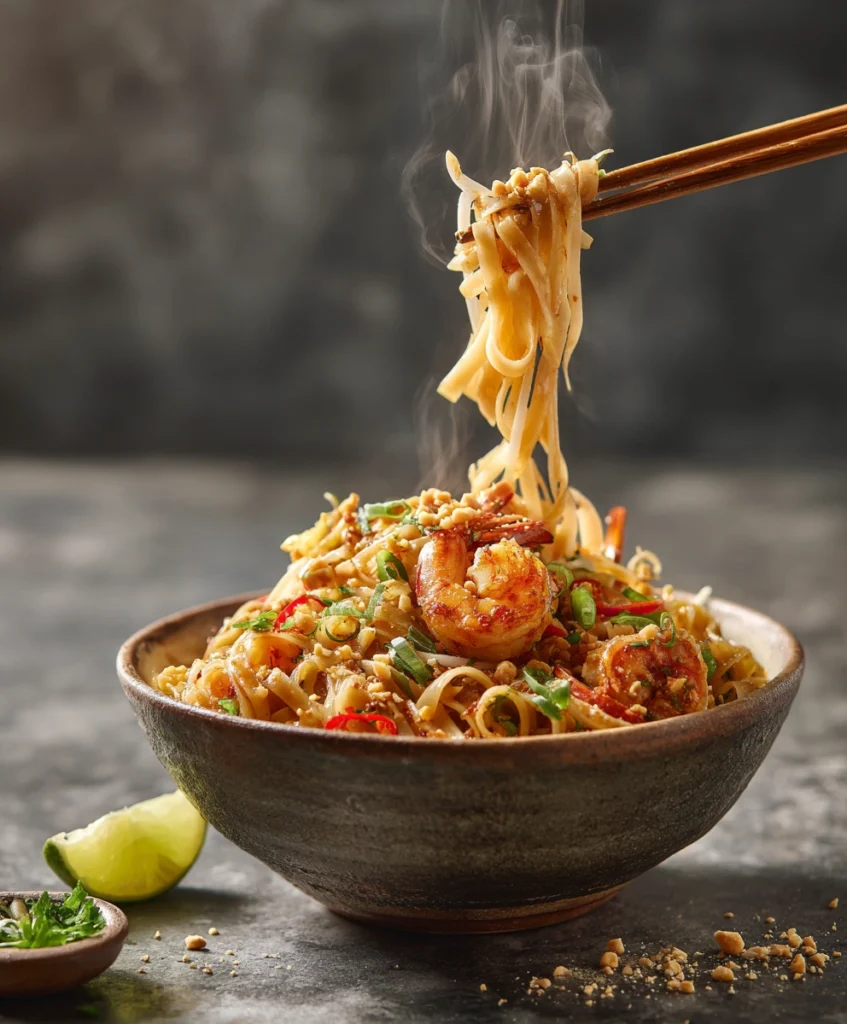
Variations You Can Try
Pad Thai is extremely flexible and easy to adapt:
- Vegetarian/Vegan: Use tofu and replace fish sauce with soy sauce.
- Authentic Style: Use tamarind paste for deeper tangy flavor.
- Extra Creamy: Add peanut butter to the sauce for richness.
- Low-Spice Version: Reduce chili sauce for a milder taste.
Tips for the Best Homemade Pad Thai
- Use high heat and cook quickly to keep the noodles from becoming soggy.
- Prepare all ingredients beforehand because stir-frying moves fast.
- Balance the sauce by tasting and adjusting sweetness or acidity.
- Garnish generously — fresh lime juice brightens the entire dish.
Final Thoughts
Pad Thai is more than just a noodle dish — it’s a celebration of Thai street-food culture and bold flavors. With simple ingredients and a quick cooking process, you can recreate a restaurant-quality meal in your own kitchen. Whether you prefer shrimp, chicken, or tofu, this classic recipe delivers comfort, freshness, and irresistible taste in every bite.