
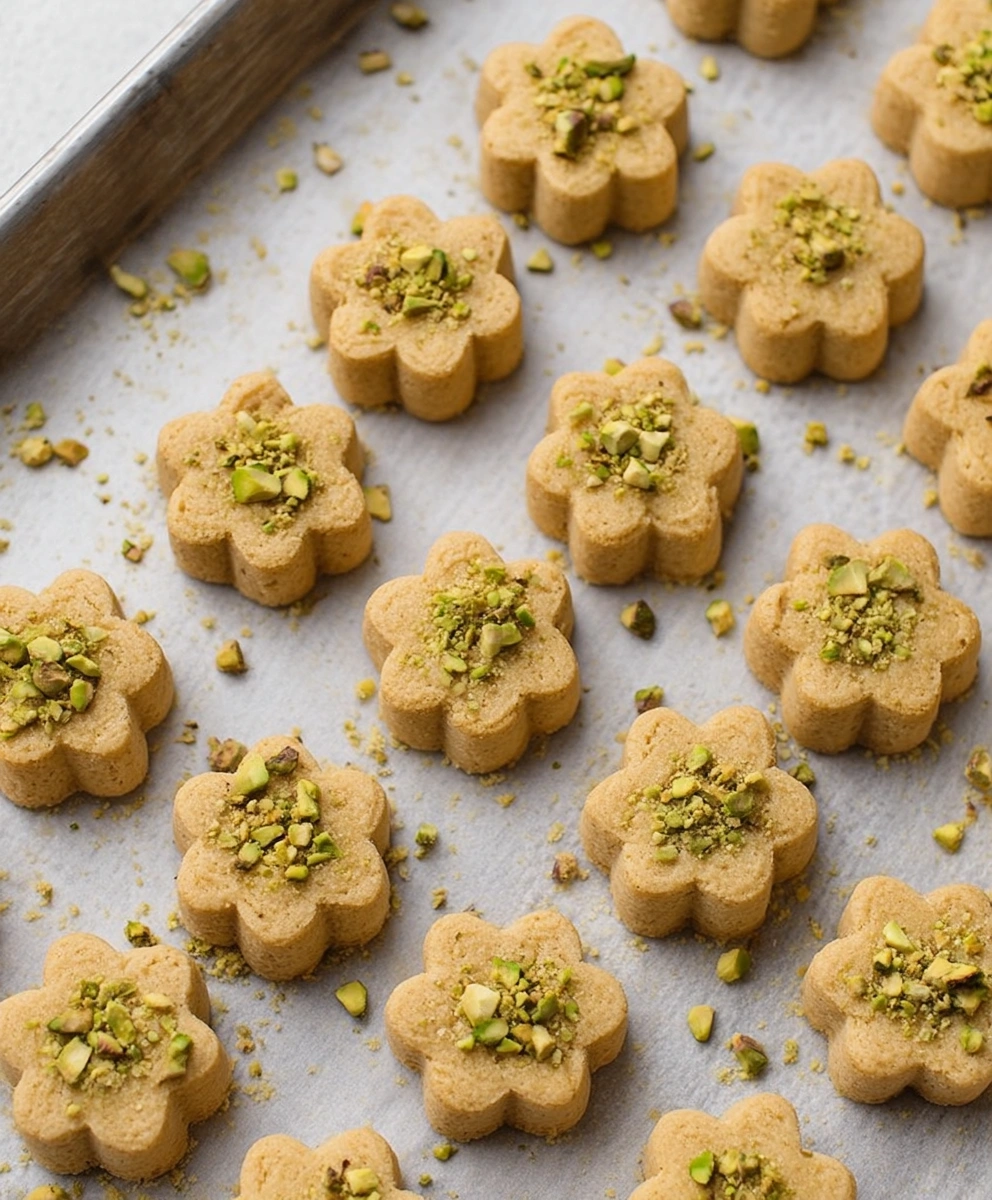
Persian Chickpea Cookies with Pistachio, traditionally known as Nan-e Nokhodchi, are delicate, aromatic cookies that hold a special place in Persian cuisine. These cookies are famous for their melt-in-your-mouth texture, subtle sweetness, and fragrant notes of rose water and cardamom. Naturally gluten-free and egg-free, they are made with chickpea flour and topped with pistachios, making them both elegant and unique.
Often prepared for Nowruz (Persian New Year) and other festive occasions, Nan-e Nokhodchi represents warmth, hospitality, and tradition. Despite their refined appearance, these cookies are surprisingly simple to make and require only a handful of ingredients.
What Makes Persian Chickpea Cookies Special?
Unlike classic butter cookies, Persian Chickpea Cookies are made with chickpea flour instead of wheat flour. This gives them a soft, crumbly texture that dissolves on the tongue. The dough is enriched with oil rather than butter, which contributes to their lightness and allows the flavors to shine.
The true character of these cookies comes from their aromatic profile:
- Cardamom provides warmth and depth
- Rose water adds a delicate floral note
- Pistachios offer color, elegance, and a subtle crunch
Together, these ingredients create a cookie that is refined, balanced, and unmistakably Persian.
Ingredients Used in Nan-e Nokhodchi
Traditional Persian Chickpea Cookies with Pistachio are made using simple pantry ingredients:
- Finely sifted chickpea flour
- Confectioners’ sugar (powdered sugar)
- Neutral vegetable oil
- Rose water
- Ground cardamom
- Chopped or slivered pistachios
The key to success lies in using very fine chickpea flour and properly sifting it to ensure a smooth dough.
How Persian Chickpea Cookies Are Made
The process begins by mixing oil with powdered sugar until smooth and creamy. Ground cardamom and rose water are added to infuse the mixture with fragrance. Chickpea flour is then gently incorporated to form a soft, pliable dough.
One important step in making Nan-e Nokhodchi is resting the dough. Allowing the dough to rest helps the flour absorb moisture and improves the texture of the cookies.
After resting, the dough is rolled out carefully and cut into small shapes. Traditionally, clover-shaped cookie cutters are used, but round or heart shapes work just as well. Each cookie is gently topped with pistachios before baking.
The cookies are baked briefly at a moderate temperature. They should remain pale or lightly golden, as overbaking can cause them to dry out.

Texture and Flavor
Once cooled, Persian Chickpea Cookies are tender, crumbly, and incredibly light. They break easily and practically melt when eaten. The sweetness is mild, allowing the floral and spice notes to stand out without being overpowering.
The pistachios add a gentle crunch and a beautiful contrast in both texture and color, making these cookies visually appealing as well as delicious.
Serving and Storage
Nan-e Nokhodchi is traditionally served with:
- Persian black tea
- Mint tea
- Light coffee
They are perfect for special occasions, holiday trays, or elegant tea times. Because they are delicate, they should be handled gently and stored in an airtight container once completely cooled. When stored properly, they keep well for several days.
Why You’ll Love These Cookies
- Naturally gluten-free
- Egg-free and dairy-free
- Light, aromatic, and not overly sweet
- Perfect for holidays and gifting
- A beautiful introduction to Persian baking
Final Thoughts
Persian Chickpea Cookies with Pistachio are more than just a dessert — they are a reflection of Persian culinary heritage. With their delicate texture, floral aroma, and elegant presentation, Nan-e Nokhodchi cookies are a wonderful way to explore traditional Middle Eastern sweets and bring a touch of sophistication to your baking.
Whether you’re preparing them for a celebration or simply enjoying them with tea, these cookies offer a timeless and memorable flavor experience.