
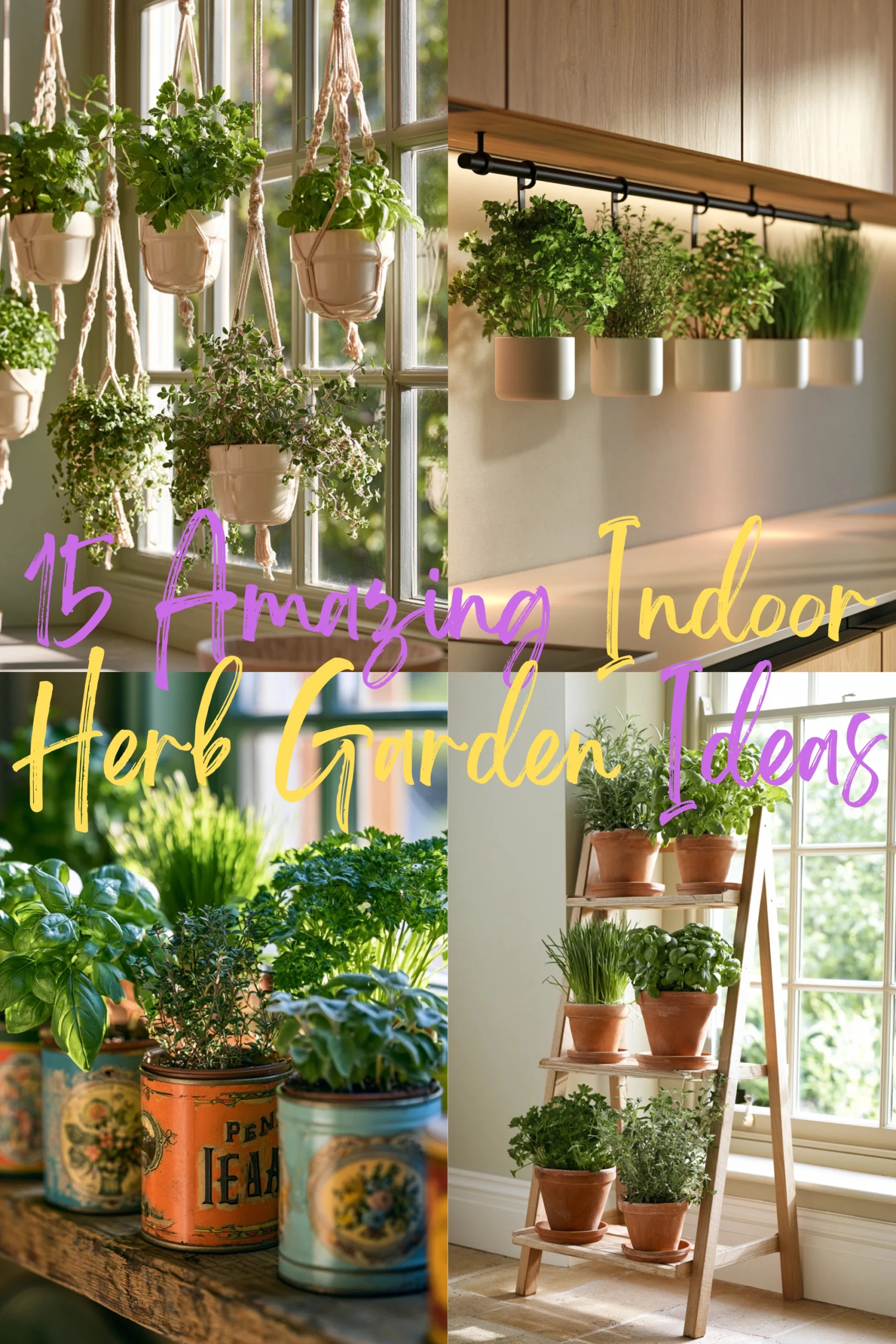
There is something special about reaching over while cooking and snipping a few leaves of fresh basil, parsley, mint, or thyme. You don’t need a large backyard—or even a balcony—to enjoy homegrown herbs. With the right setup, a bright kitchen window, an empty wall, or a small corner can become a beautiful and productive indoor garden. These 15 amazing indoor herb garden ideas prove that growing herbs indoors can be practical, affordable, and surprisingly stylish. From simple windowsill pots and rustic mason jars to vertical gardens and modern hydroponic systems, there is an option for almost every home. Whether you live in a small apartment or simply want fresh herbs closer to your kitchen, these indoor herb garden ideas can help you create a green space you’ll actually use.
Why Create an Indoor Herb Garden?
An indoor herb garden is about more than decoration. Having fresh herbs close to where you prepare meals makes it easy to harvest only what you need, while adding natural greenery to your home. Many popular culinary herbs can be grown indoors when they receive enough light and are planted in appropriate containers. Basil, parsley, thyme, rosemary, oregano, chives, cilantro, and mint are all popular options. The key is choosing an indoor herb garden design that fits both your available space and the amount of natural light in your home.
1. Create a Classic Windowsill Herb Garden
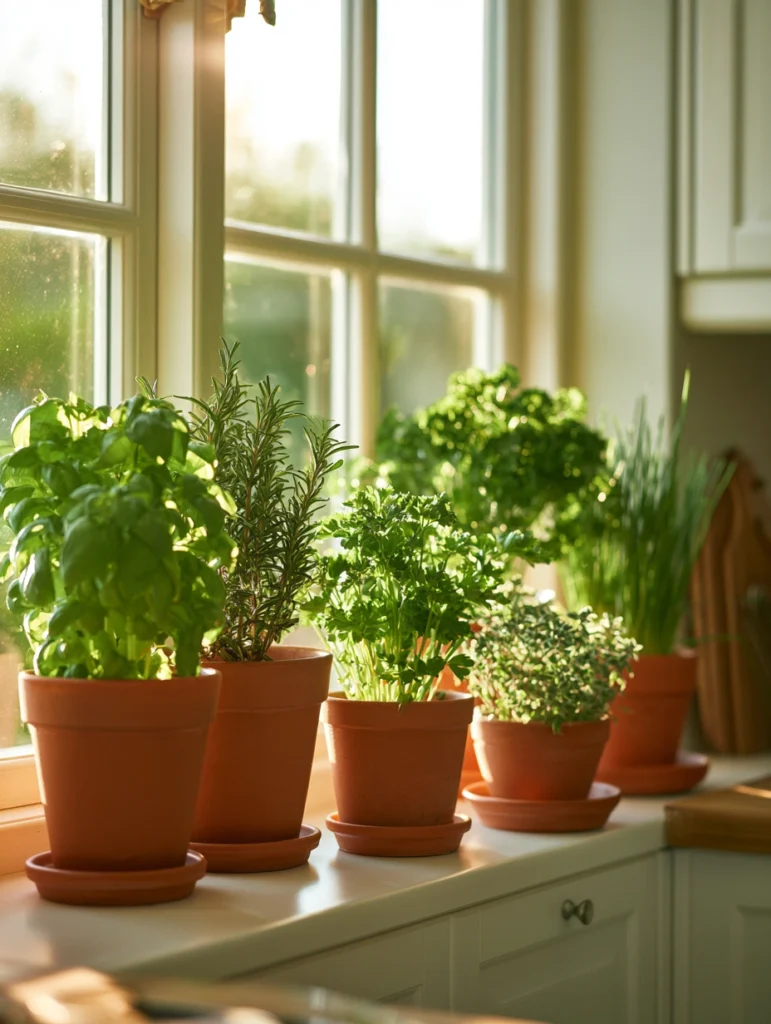
A sunny windowsill is one of the easiest places to start an indoor herb garden. Arrange several small pots along a bright kitchen window and plant the herbs you use most frequently. Basil, thyme, parsley, oregano, and chives can create a beautiful mix of colors and textures. Matching terracotta or ceramic pots give the garden a clean, coordinated appearance. Place saucers beneath containers to protect the windowsill from excess water. This setup is especially convenient in the kitchen because fresh herbs stay within reach while you’re cooking.
2. Build a Mason Jar Herb Garden
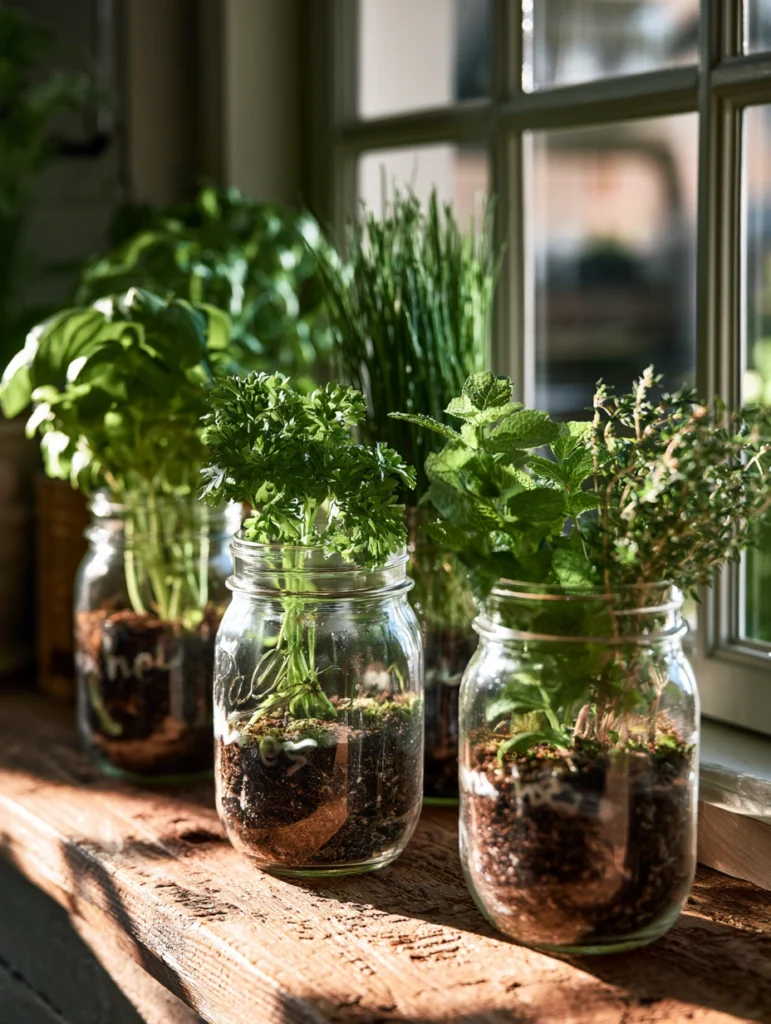
Mason jars can turn a simple herb collection into charming kitchen décor. Arrange several glass jars along a shelf or windowsill and label them with the names of your herbs. Basil, parsley, chives, and thyme look particularly attractive when grouped together. One important consideration is drainage. Because traditional mason jars don’t have drainage holes, a practical option is to place a small draining nursery pot inside the decorative jar rather than planting directly into a permanently sealed container. The result combines rustic farmhouse style with a practical indoor garden.
3. Design a Vertical Wall Herb Garden
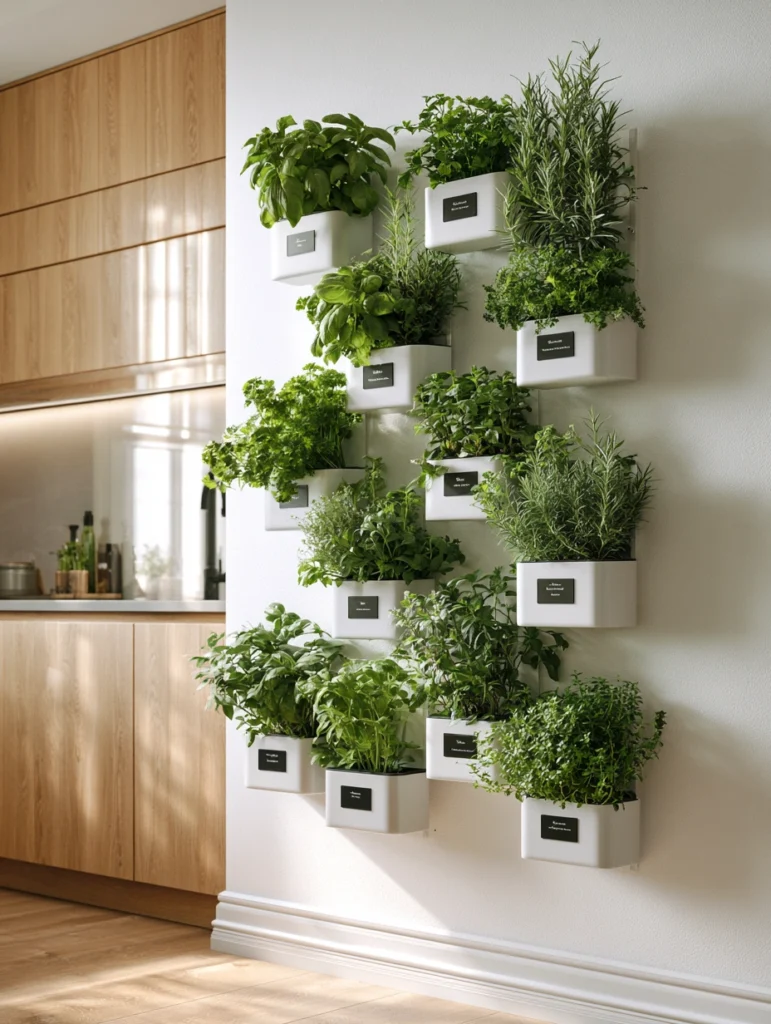
When floor and counter space are limited, look toward the walls. A vertical herb garden allows you to grow several varieties without taking over your kitchen counter. Mount individual planters on a wooden panel, metal frame, or purpose-built vertical gardening system. Arrange herbs at different heights to create a living wall effect. Add small labels beneath each planter for an organized finishing touch. Vertical gardens work especially well in apartments and small kitchens where every inch of space matters.
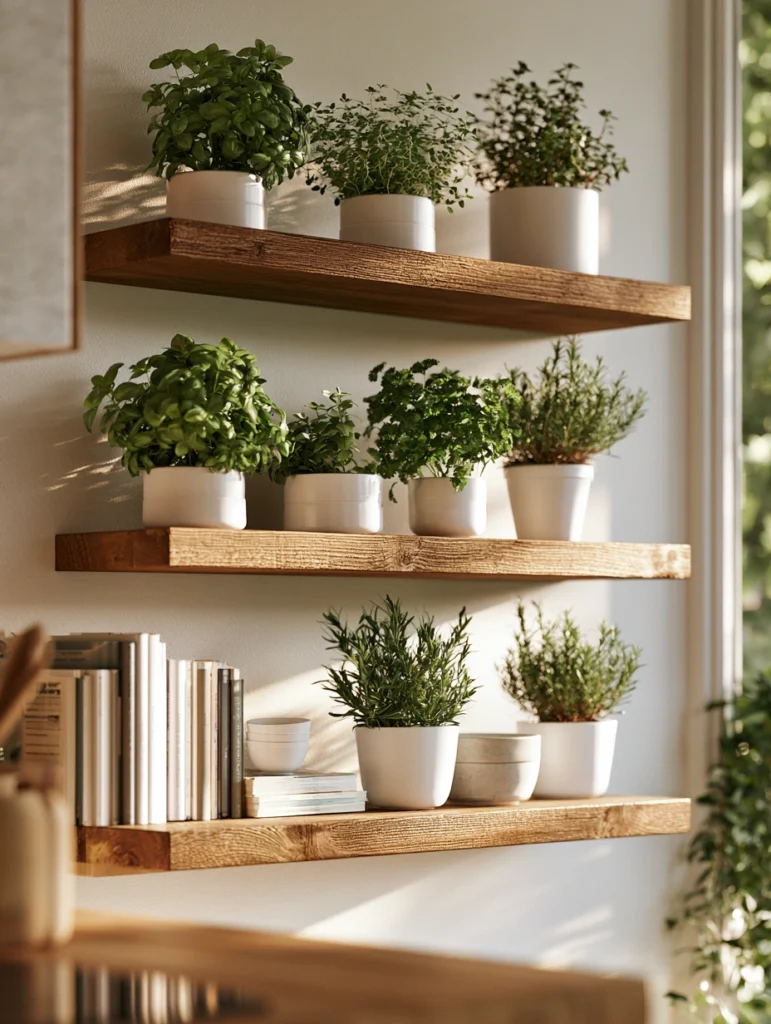
4. Add Herbs to Floating Kitchen Shelves
Floating shelves aren’t just for plates and decorative objects. Dedicate one shelf—or part of several shelves—to small herb pots. Mixing greenery with cookbooks, ceramics, and kitchen accessories creates an effortlessly styled appearance. Place the shelves near a window whenever possible. Frequently used herbs such as basil, oregano, parsley, and thyme are ideal because you can quickly reach them while preparing food. Using matching pots will make even a large collection of herbs feel organized.
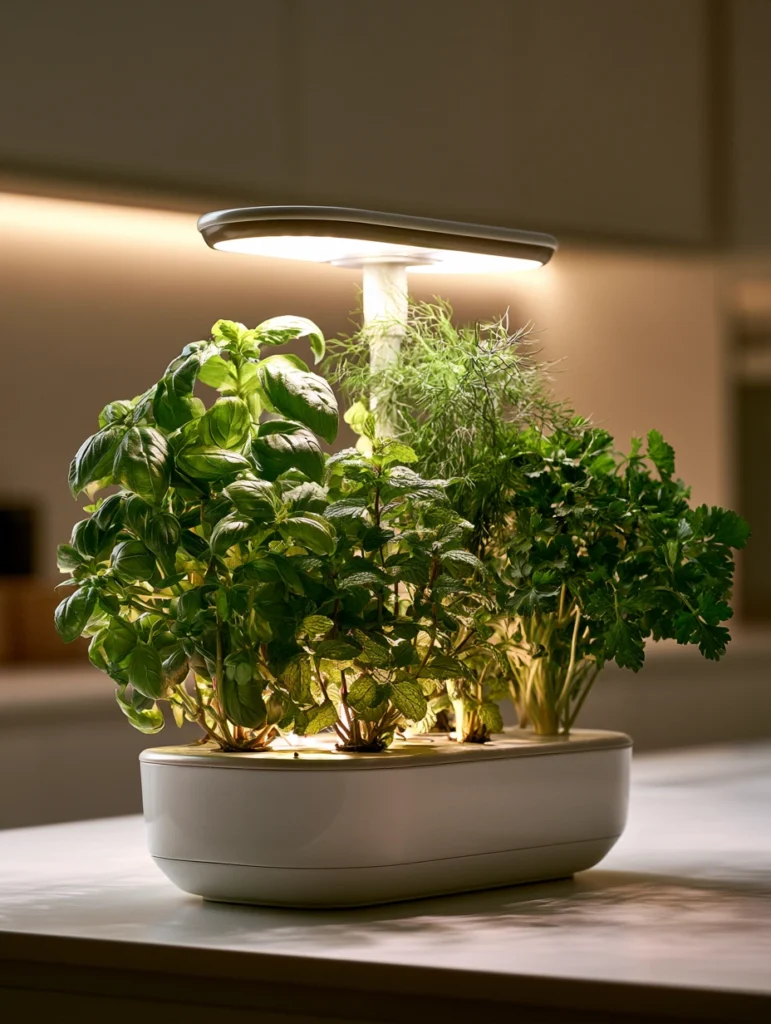
5. Try a Countertop Hydroponic Herb Garden
For a more modern approach, consider a compact hydroponic indoor garden. Hydroponic systems grow plants using water and nutrients rather than conventional soil. Many countertop models also incorporate LED grow lights, making them useful in kitchens that don’t receive enough natural sunlight. They can be particularly convenient for people who want a tidy, compact growing system with fewer soil-related messes. Basil, mint, dill, parsley, and chives are popular choices for small indoor systems.
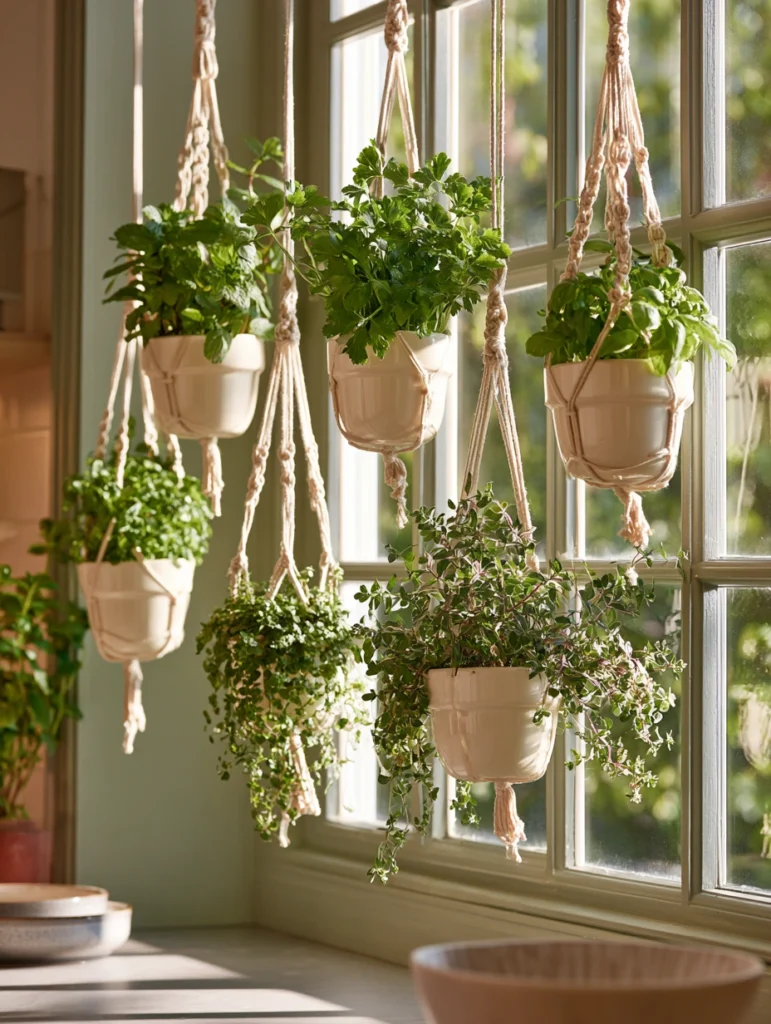
6. Create a Hanging Herb Garden
A hanging garden is an attractive solution when your counters are already full. Suspend small planters from the ceiling near a bright window using sturdy hooks. Macramé holders can create a relaxed bohemian style, while simple ceramic hanging pots work beautifully in contemporary homes. Try planting mint, parsley, oregano, or thyme in separate containers. The different heights of the hanging plants can transform an ordinary kitchen corner into an eye-catching green feature.
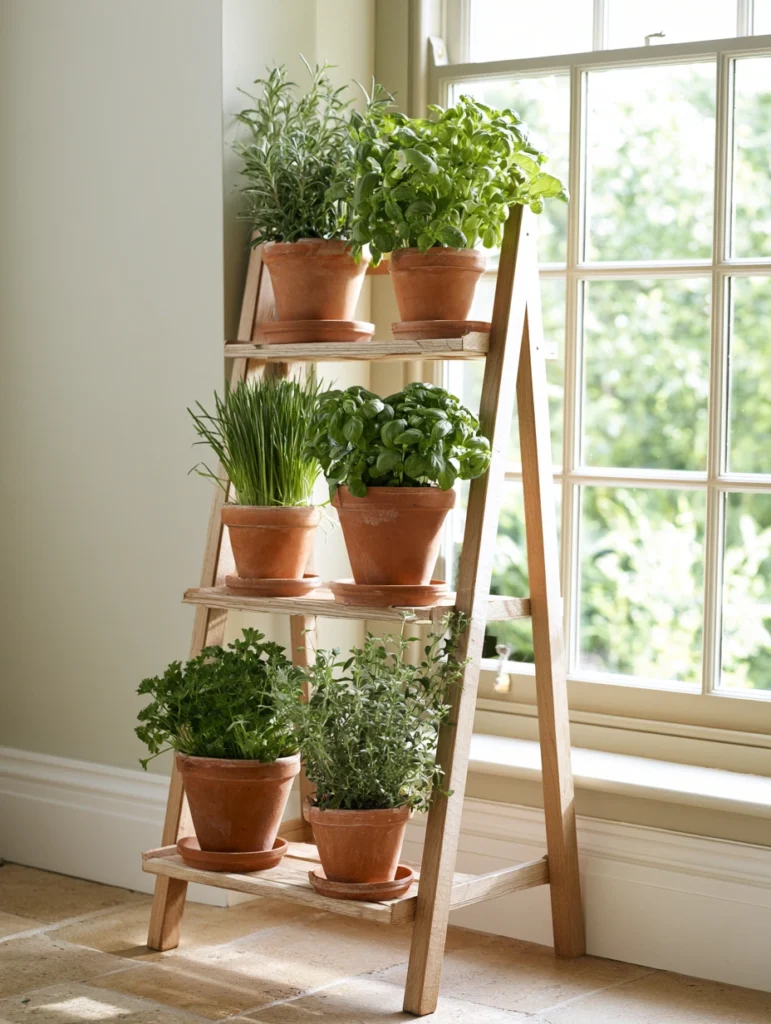
7. Use a Wooden Ladder Shelf for Herbs
A ladder shelf provides several growing levels while occupying relatively little floor space. Position one near a sunny window and fill each level with small herb pots. Taller herbs can sit on lower shelves while compact varieties can occupy the upper levels. Mix rosemary, basil, parsley, chives, oregano, and thyme for variety. Besides providing useful growing space, a wooden ladder filled with greenery can become an attractive decorative feature in a kitchen or dining area.
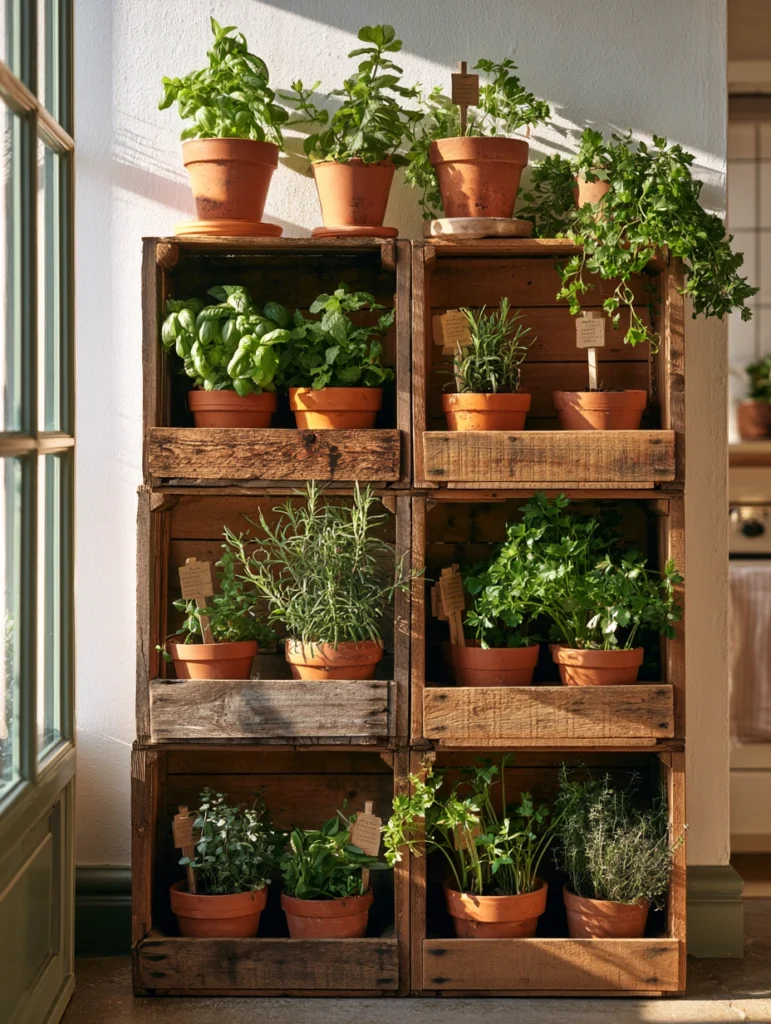
8. Make a Rustic Wooden Crate Herb Garden
Old wooden crates can become surprisingly beautiful herb planters. Use one large crate or stack several securely against a wall. Place individual draining pots inside so plants can easily be removed for watering or rearranging. A slightly weathered wooden finish works especially well in farmhouse, cottage, or rustic kitchens. Add handwritten plant markers to make the arrangement feel like a miniature kitchen market garden.
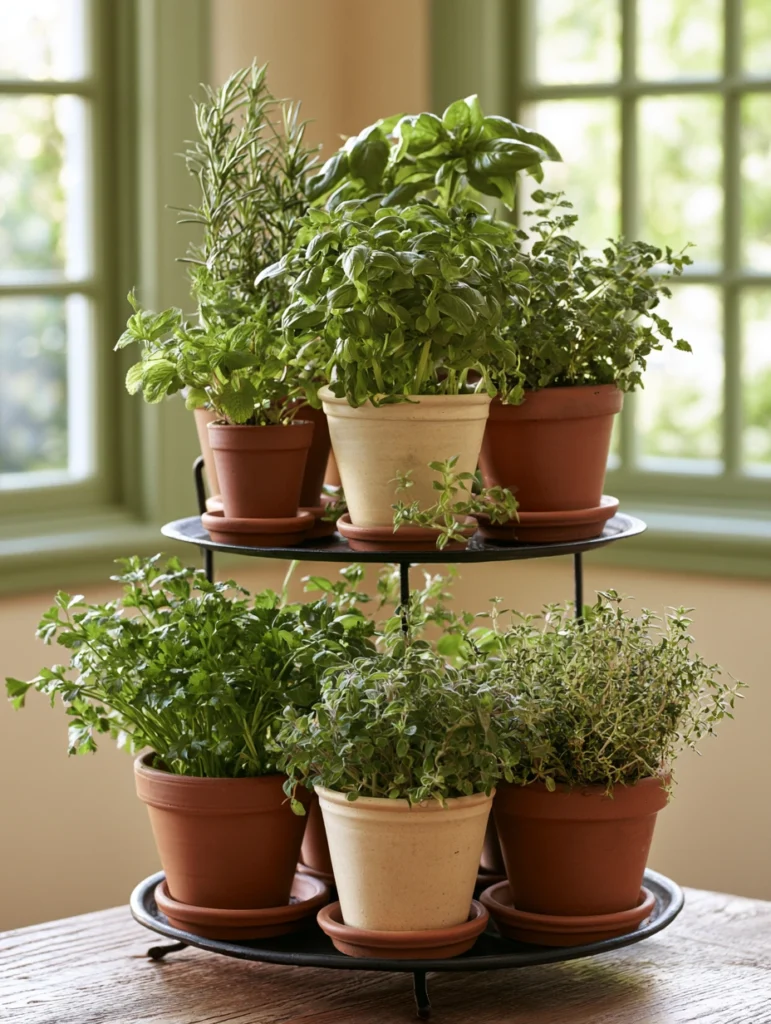
9. Create a Tiered Herb Garden Stand
A tiered stand is one of the smartest indoor herb garden ideas for small spaces because it uses vertical rather than horizontal space. Choose a two- or three-level plant stand and arrange herbs according to their height. Trailing varieties can sit toward the edges while upright rosemary or basil can become focal points. A portable tiered stand can also be repositioned when your plants need better light. Choose matching containers to create a polished, intentional appearance.
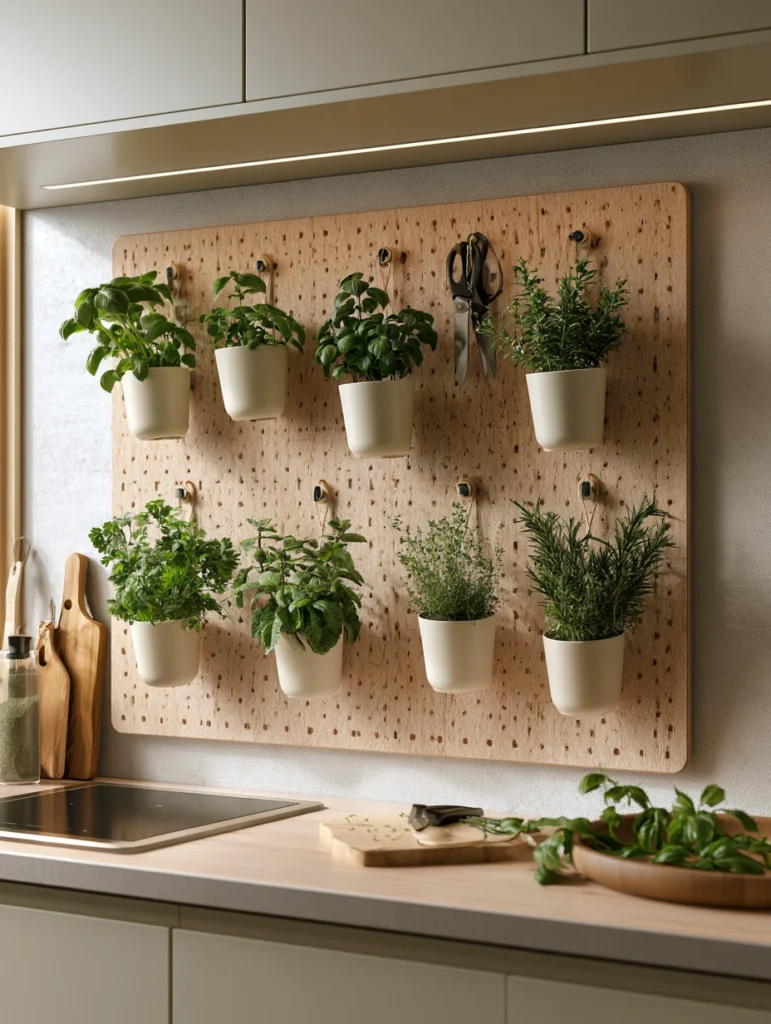
10. Install a Pegboard Herb Garden
A pegboard makes an indoor herb garden both functional and customizable. Install one on an empty kitchen wall and attach small lightweight planters using sturdy hooks or holders. You can reposition the containers as the plants grow or whenever you want to change the arrangement. Combine herb pots with gardening scissors, small labels, or other lightweight accessories to create a practical gardening station. This is an especially creative choice for modern apartments.
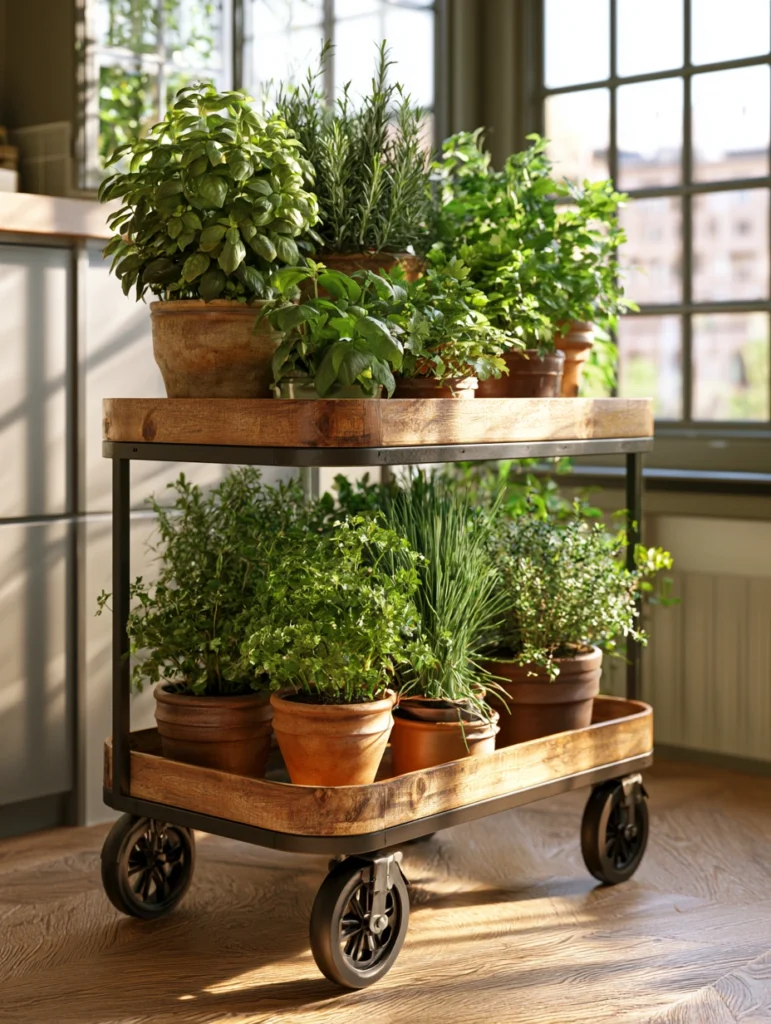
11. Turn a Rolling Cart Into a Mobile Herb Garden
A rolling utility cart can become a surprisingly useful indoor herb station. Fill its shelves with different herbs and move the entire garden toward whichever window receives the best light during the day. Keep taller plants on the upper level and smaller containers below. Gardening supplies can even be stored on the bottom shelf. This flexible setup is ideal for renters because it doesn’t require drilling holes or permanently modifying the room.
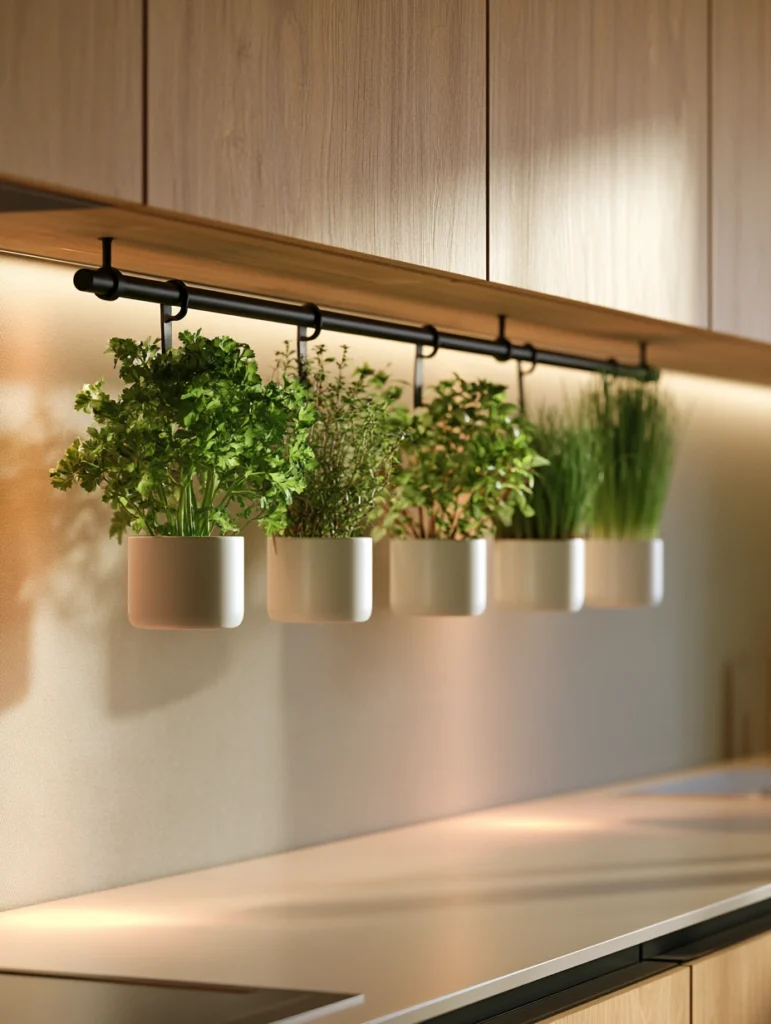
12. Create an Under-Cabinet Herb Garden
The unused area beneath kitchen cabinets can provide valuable growing space. Install a secure rail and attach lightweight herb containers below it. The result keeps fresh herbs close to your food-preparation area without occupying the countertop. Small varieties such as thyme, parsley, oregano, and chives work particularly well. If the location doesn’t receive adequate natural light, supplemental grow lighting may be necessary for healthy growth.
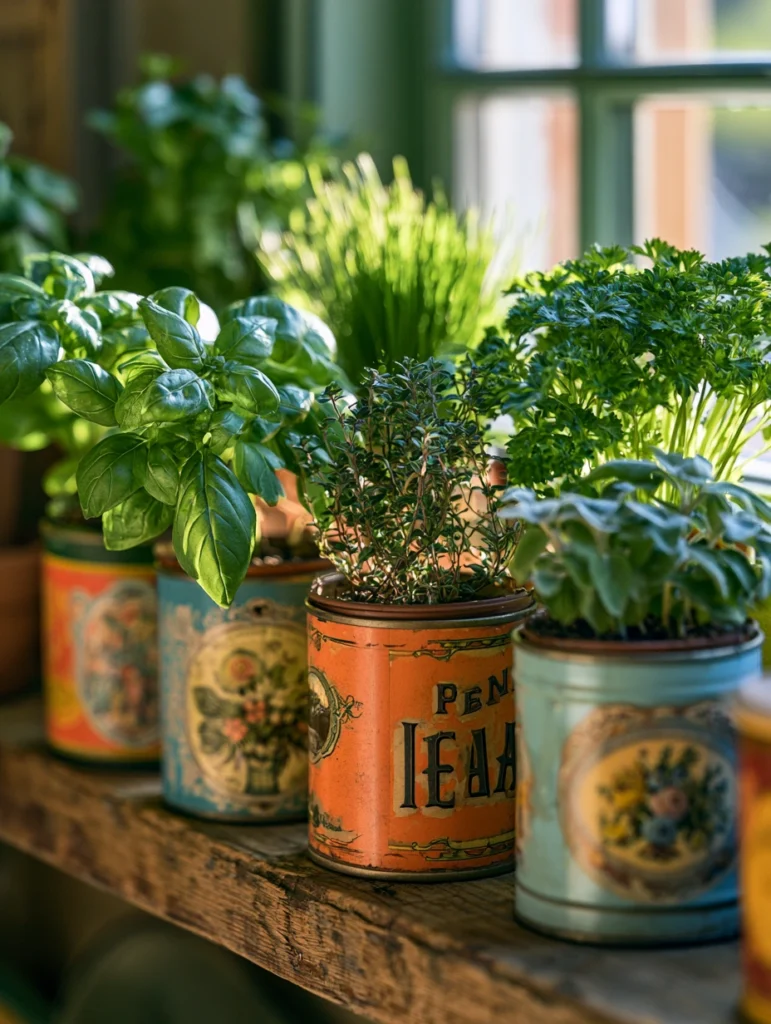
13. Repurpose Tea Tins Into Herb Planters
Give old tea tins a second life by turning them into colorful herb containers. Vintage tins bring personality to an indoor garden and look beautiful lined up on a kitchen shelf. Because many decorative tins weren’t designed for plants, use an inner container with proper drainage or modify the container appropriately before planting. Choose different tins for basil, chives, thyme, parsley, and oregano to create a playful collection.
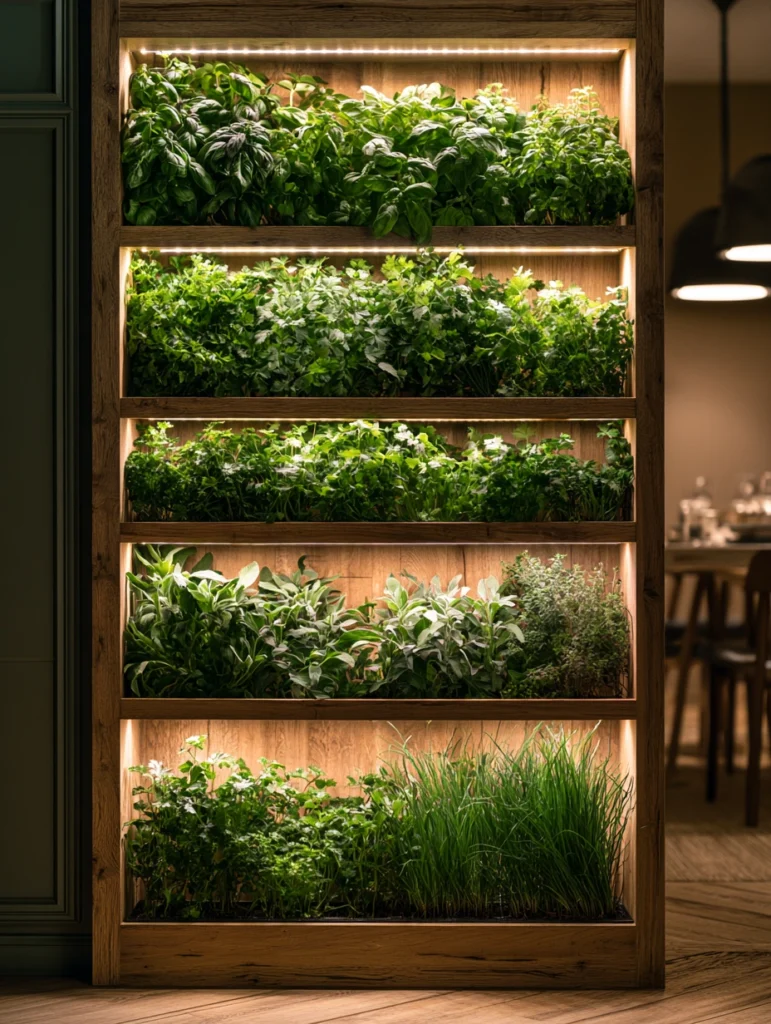
14. Build a Bookshelf Herb Garden With Grow Lights
Don’t have a sunny kitchen? An unused bookshelf can become a dedicated growing station. Arrange pots on several shelves and install LED grow lights above the plants. This allows you to create a more controlled growing environment even in darker areas of your home. A bookshelf system can hold significantly more plants than a traditional windowsill while keeping everything organized vertically. Try mixing basil, cilantro, parsley, sage, thyme, and chives for a diverse culinary collection.
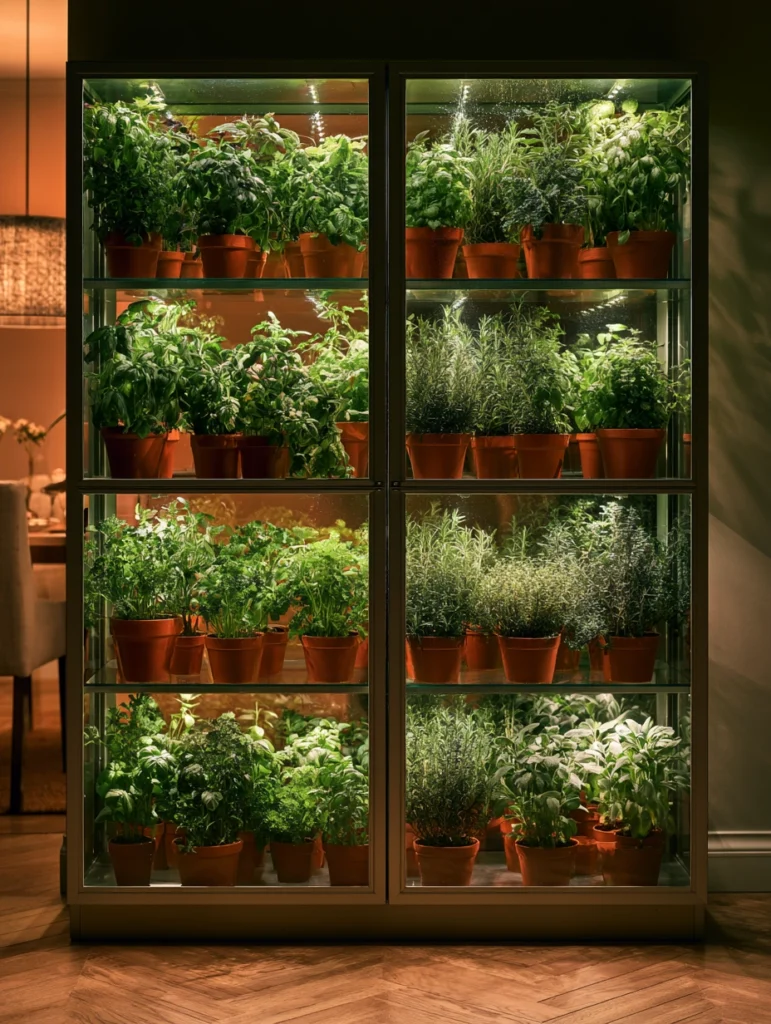
15. Create a Mini Indoor Greenhouse Cabinet
For a statement indoor garden, transform a glass-front cabinet into a mini greenhouse. Arrange multiple herb varieties on shelves behind transparent doors and incorporate appropriate grow lights when natural light isn’t sufficient. The enclosed display creates a striking green focal point while keeping your collection organized. A greenhouse cabinet can work especially well for serious indoor gardeners who want to dedicate more space to growing herbs throughout the year.
If you’re planning a bigger backyard transformation, explore these 10 beautiful outdoor kitchen ideas for even more inspiration to turn your outdoor space into a stylish place for cooking, dining, and entertaining.
Tips for a Successful Indoor Herb Garden
No matter which design you choose, the health of your plants should come before aesthetics.
Give herbs enough light. Position plants near a bright window when possible. If your home has limited natural light, a suitable grow light can help provide more consistent growing conditions.
Choose containers with drainage. Herbs generally perform better when excess water can escape instead of collecting around their roots.
Avoid overwatering. Check the soil rather than watering automatically every day. Different herbs and indoor conditions can require different watering schedules.
Choose herbs you actually use. Basil, parsley, thyme, rosemary, oregano, cilantro, chives, and mint are excellent possibilities, but your garden will be more useful if you prioritize herbs that regularly appear in your cooking.
Give plants enough room. A tiny herb seedling may eventually become much larger. Repot plants when they begin outgrowing their containers.
Harvest regularly. Frequent, appropriate harvesting can encourage many culinary herbs to produce fresh growth.
Which Indoor Herb Garden Idea Is Best for Small Spaces?
If you’re working with a tiny kitchen or apartment, vertical designs are usually the most practical. A wall-mounted garden, pegboard planter, hanging herb garden, or tiered plant stand can provide room for several plants without sacrificing valuable countertop space. For an extremely simple solution, however, it’s difficult to beat a few attractive pots on a sunny windowsill. If natural sunlight is the biggest limitation rather than space, consider a bookshelf garden with grow lights or a compact hydroponic system with integrated lighting.
After refreshing your backyard, bring that same inviting atmosphere indoors with these simple tips on how to make your house smell amazing and create a home that feels fresh, cozy, and welcoming
Best Herbs to Grow Indoors
Some of the most popular herbs to experiment with indoors include:
- Basil
- Parsley
- Chives
- Thyme
- Oregano
- Mint
- Rosemary
- Cilantro
- Dill
- Sage
The best choice depends on the temperature, humidity, available light, container size, and care you can provide.
For more creative inspiration, explore these 12 budget-friendly DIY garden projects that can help you transform your space with simple, affordable ideas.
Frequently Asked Questions
What herbs grow best together indoors?
Herbs with similar growing requirements are easier to manage together. Mediterranean herbs such as rosemary, thyme, oregano, and sage generally appreciate bright conditions and well-draining soil. Herbs with different moisture requirements are often easier to maintain in individual containers.
Where is the best place to put an indoor herb garden?
A bright kitchen window is often an excellent location because it provides natural light and keeps herbs conveniently close to where they’re used. The ideal location ultimately depends on the light requirements of the herbs you’re growing.
Can herbs grow indoors all year?
Many herbs can be grown indoors beyond the traditional outdoor growing season when their needs for light, water, temperature, nutrients, and space are adequately met. Supplemental grow lights can be particularly useful during darker months.
How do I make an indoor herb garden look attractive?
Use coordinated containers, attractive plant labels, natural materials, and different plant heights. Floating shelves, terracotta pots, wooden stands, hanging planters, and glass cabinets can turn practical herbs into part of your home’s décor.
Do indoor herbs need drainage holes?
For soil-grown herbs, containers that allow excess water to drain are generally the safer choice. If you love a decorative container without holes, use it as an outer pot and place a smaller draining container inside.
Final Thoughts About 15 Amazing Indoor Herb Garden Ideas
The best indoor herb garden ideas combine beauty with practicality. You don’t need an expensive setup or a large home to start growing fresh herbs. A sunny windowsill and a few pots may be all you need.
If you want something more decorative, experiment with floating shelves, hanging pots, a pegboard garden, wooden crates, or a tiered stand. And if your home receives limited natural light, a hydroponic system or bookshelf equipped with grow lights can open up even more possibilities.
Start with a few herbs you regularly use in the kitchen and build your collection gradually. Before long, your indoor herb garden can become one of the freshest—and most useful—features in your home.