
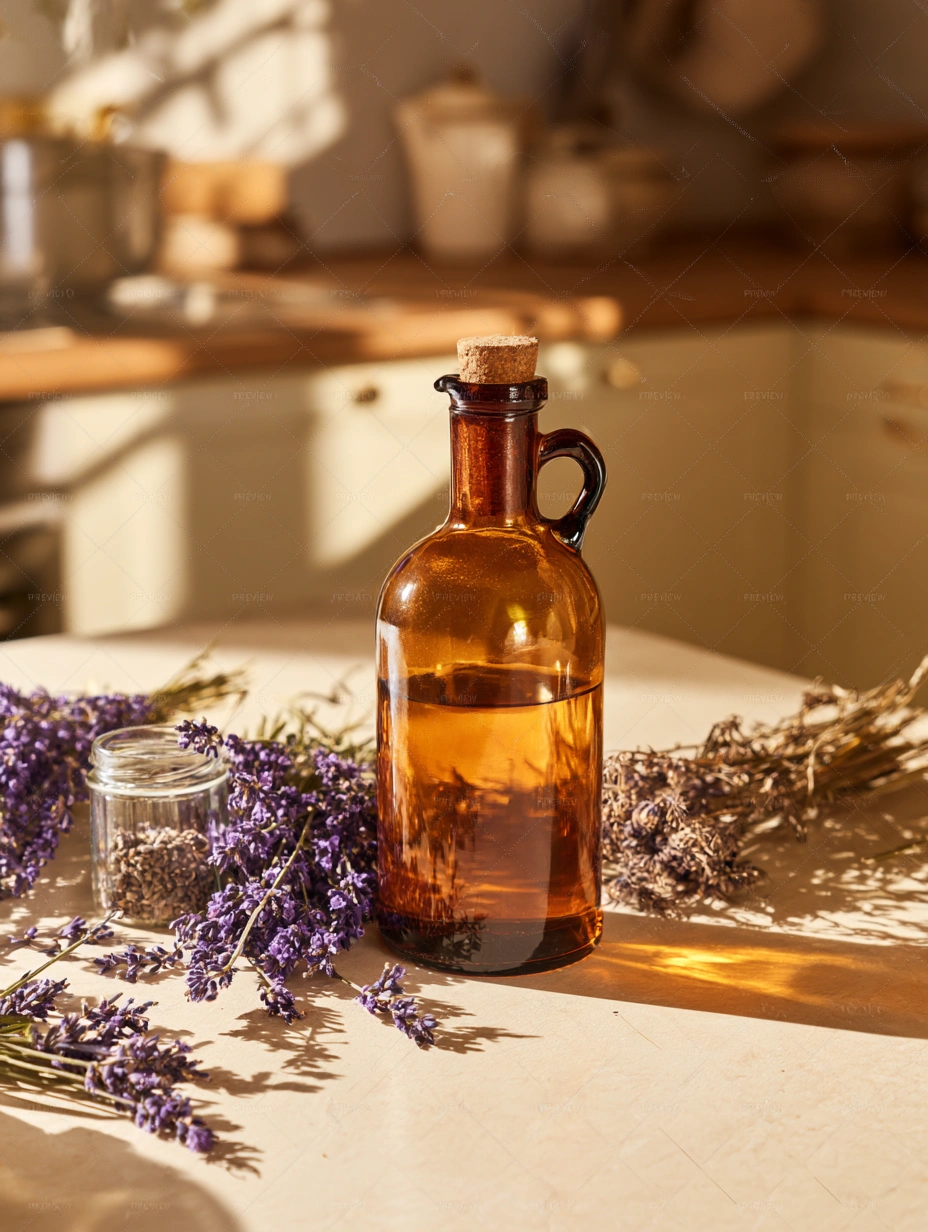
If you’ve ever wondered how to make lavender oil at home, you’ll be surprised by how simple and rewarding it can be. I first tried making my own lavender oil because I wanted an easy, natural way to capture that beautiful lavender scent without buying another expensive little bottle from the store. After experimenting with dried lavender and different carrier oils, I found a method that became one of my favorite homemade projects. The process is wonderfully simple, the aroma is calming and fresh, and I love knowing exactly what goes into every jar. Whether you want to use your homemade lavender-infused oil for massage, skincare, bath rituals, or simply as a thoughtful handmade gift, I’ll walk you through the method that worked best for me.
Lavender Infused Oil vs. Lavender Essential Oil
Although people often call both products “lavender oil,” they are not the same thing.
Lavender-infused oil is made by steeping lavender flowers in another oil, such as jojoba, sweet almond, grapeseed, sunflower, or olive oil.
Lavender essential oil, on the other hand, is a highly concentrated aromatic extract typically produced through steam distillation.
This recipe focuses on the infused version because it is inexpensive, beginner-friendly, and doesn’t require a distillation setup.
What You’ll Need to Make Lavender Oil
Ingredients
- Dried lavender flowers or lavender buds
- Carrier oil of your choice
Equipment
- Clean, completely dry glass jar with a tight-fitting lid
- Fine-mesh strainer
- Cheesecloth or muslin cloth
- Clean bowl
- Funnel
- Dark glass bottle or clean storage jar
Optional
- Vitamin E oil
- Label for writing the preparation date
You don’t need exact measurements. A simple approach is to loosely fill approximately half to three-quarters of your jar with dried lavender and then add enough carrier oil to completely submerge the flowers.
What Is the Best Oil to Use for Lavender Oil?
Your choice of carrier oil can influence the texture, fragrance, and final use of your lavender infusion.
Jojoba Oil
Jojoba has a light texture and relatively subtle scent, making it an excellent option for facial and body products.
Sweet Almond Oil
Sweet almond oil creates a smooth, luxurious-feeling infusion and works particularly well for massage and body oils.
Grapeseed Oil
Grapeseed oil feels relatively light on the skin and is a good choice if you don’t want a heavy finished product.
Olive Oil
Extra-virgin olive oil is inexpensive and widely available. However, its distinctive aroma may compete somewhat with lavender’s delicate floral scent.
Sunflower Oil
Sunflower oil is another versatile choice that has a lighter fragrance than olive oil.
How To Make Lavender Oil Step by Step
Now comes the fun part. This slow-infusion method requires only a few minutes of active preparation before nature does most of the work.
Step 1: Dry the Lavender Completely
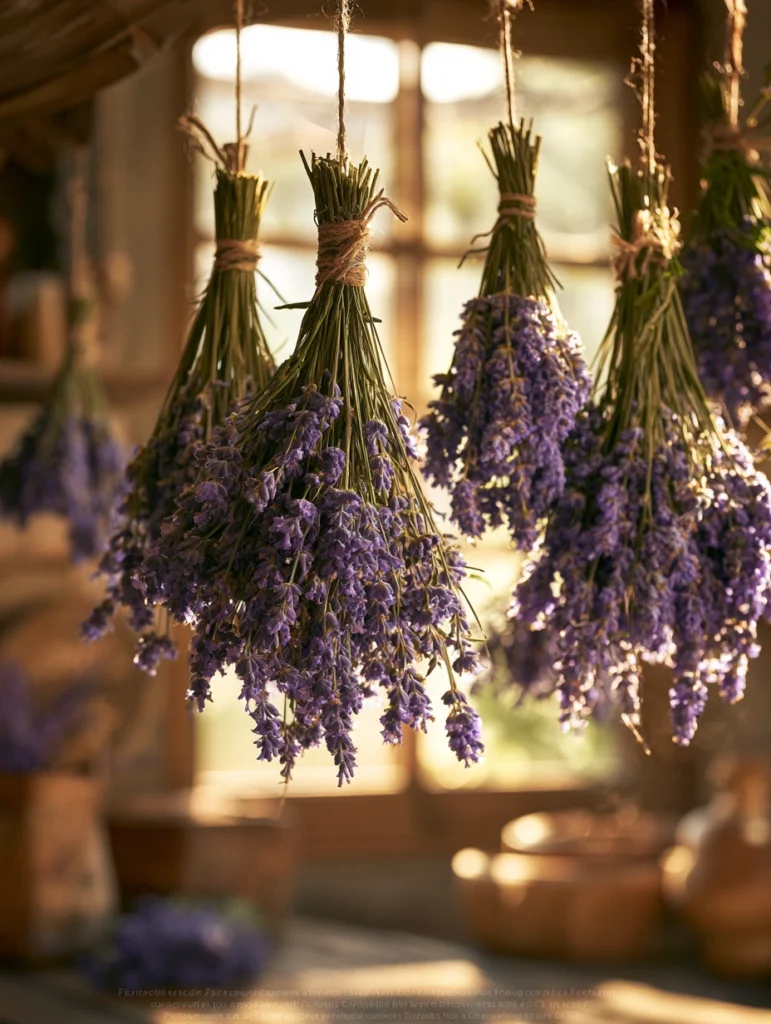
If you’re using packaged dried lavender buds, you can move directly to the next step. If you’re harvesting lavender from your own garden, however, it is important to allow it to dry thoroughly before placing it in oil. Gather your lavender stems into small bundles and hang them upside down somewhere dry with good airflow and away from excessive moisture. The flowers should feel completely dry before you use them. This step matters because moisture trapped inside an oil infusion can encourage spoilage.
Step 2: Prepare the Lavender Flowers
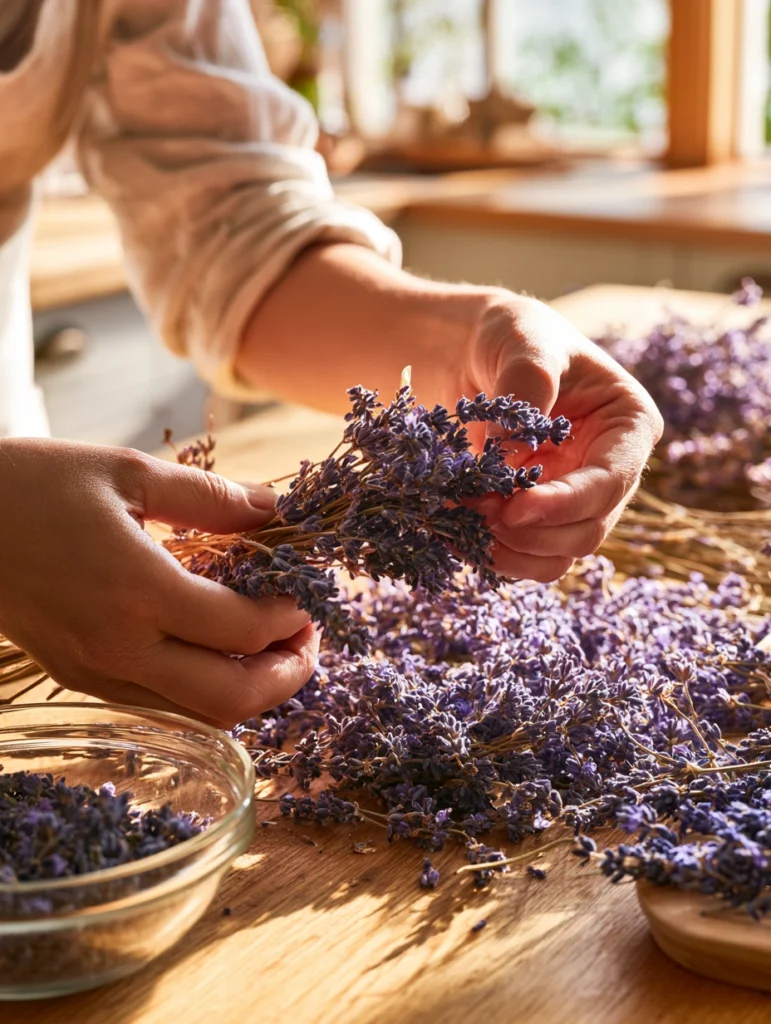
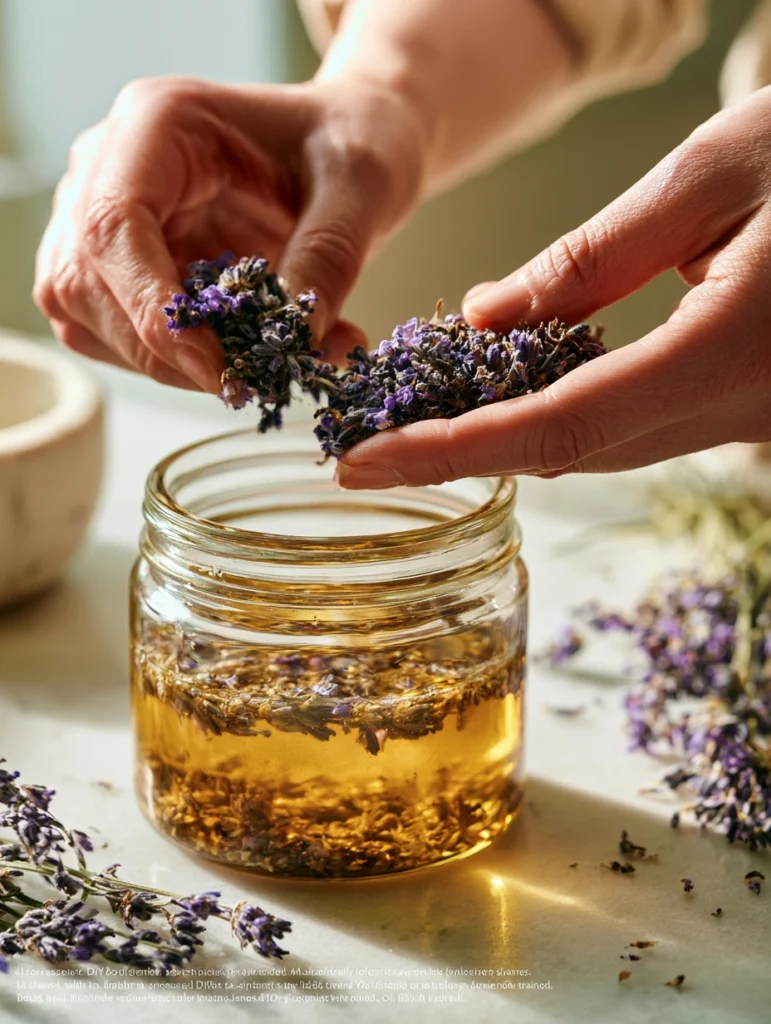
Once your lavender is completely dry, remove the buds and flowers from the tougher stems. Gently rub or lightly crush some of the dried flowers between your fingers. You don’t need to pulverize them into powder. The goal is simply to break them slightly before infusion. Place the dried lavender into a clean and completely dry glass jar. Fill approximately half to three-quarters of the jar without packing the flowers down too tightly.
Step 3: Add Your Carrier Oil
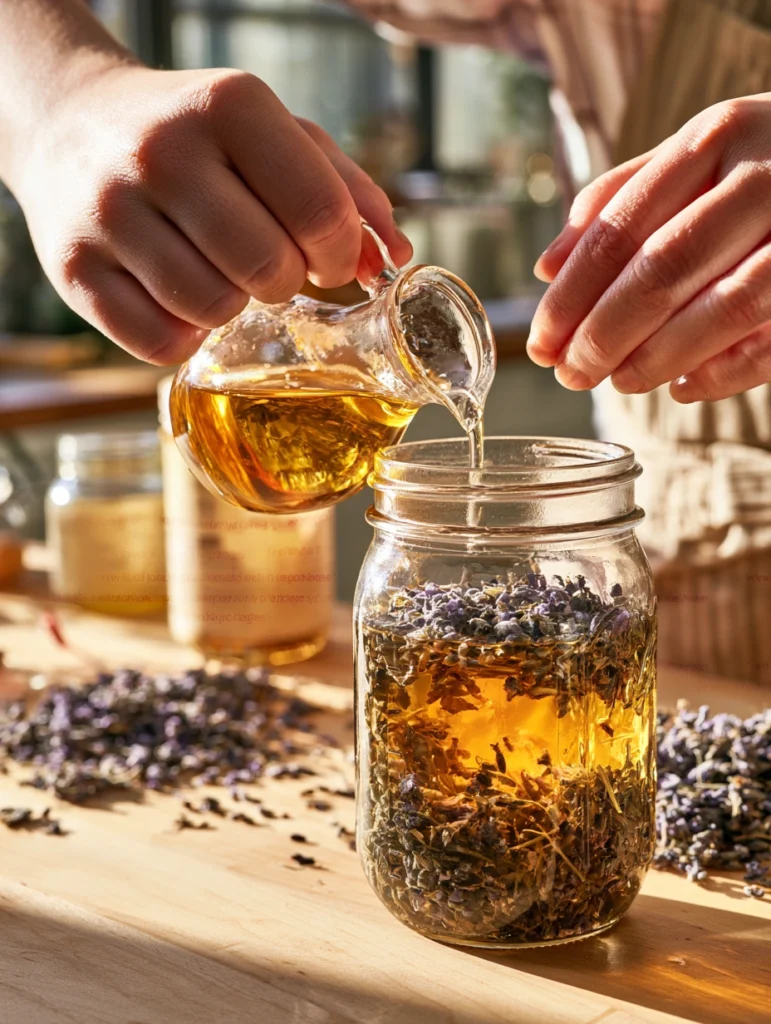
Slowly pour your chosen carrier oil over the lavender. Continue adding oil until the lavender is completely submerged. Ideally, leave a little oil above the flowers rather than allowing dry pieces to remain exposed at the surface. Use a clean spoon to gently stir the mixture and release any trapped air bubbles. Add additional oil if necessary before tightly closing the jar.
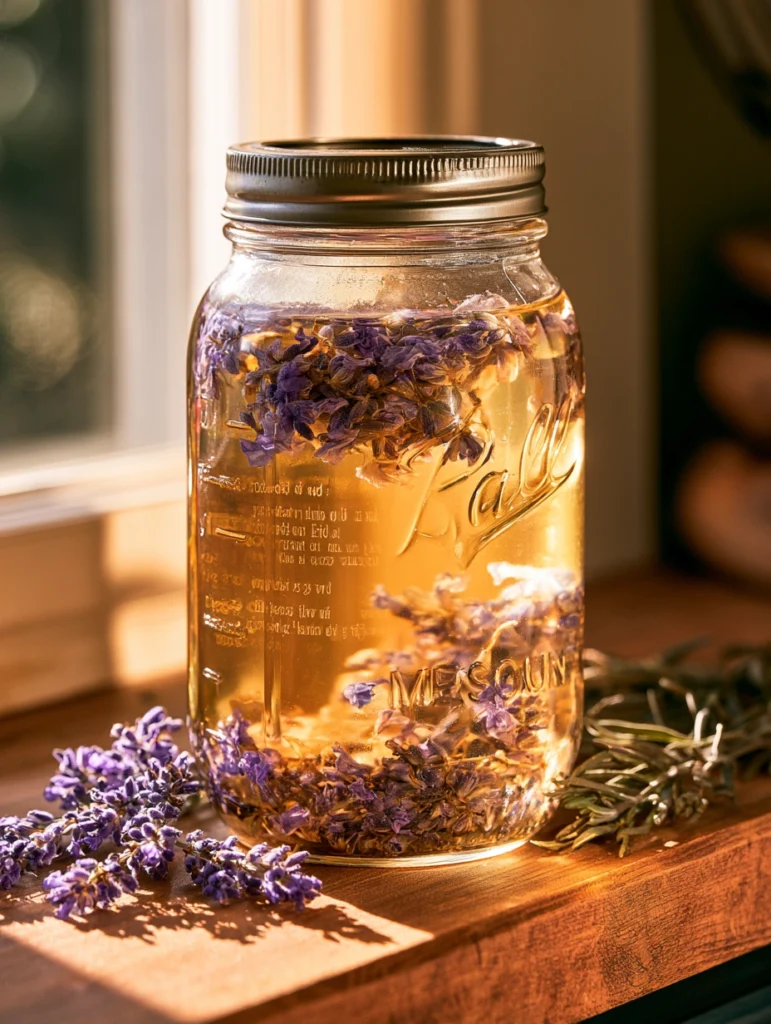
Step 4: Let the Lavender Infuse
Place the sealed jar somewhere moderately warm and protected from excessive heat. Allow the lavender to infuse for approximately 2 to 4 weeks. Some herbal infusion methods extend this to 4–6 weeks for a stronger infusion. Gently turn or shake the jar every few days to redistribute the flowers. Check periodically to make sure the plant material remains covered in oil. Over time, you’ll notice the carrier oil developing a delicate herbal lavender aroma.
Step 5: Strain the Lavender Oil
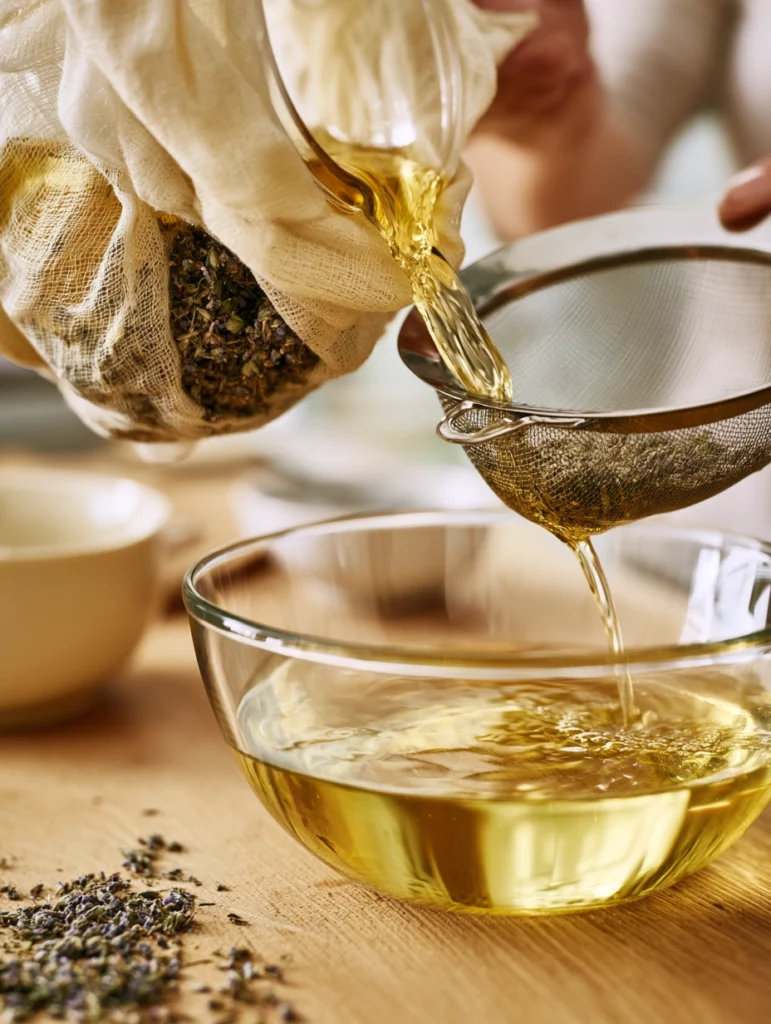
Once you’re happy with the strength of your infusion, it’s time to remove the lavender. Place a fine-mesh strainer over a clean bowl and line it with cheesecloth or muslin. Slowly pour the lavender and oil mixture through the strainer. Allow the oil to drain thoroughly. Gather the edges of the cheesecloth and gently press the flowers to recover the remaining oil. Discard or compost the used lavender flowers. You should now have beautifully fragrant homemade lavender-infused oil.
Step 6: Make the Lavender Scent Stronger — Optional
Do you want a stronger lavender fragrance? Instead of immediately bottling your oil, you can perform a second infusion. Add a fresh batch of completely dried lavender flowers to your strained oil and repeat the infusion process. After another couple of weeks, strain it again. This technique can create a more noticeable lavender aroma without adding synthetic fragrance.
Step 7: Bottle and Store Your Homemade Lavender Oil
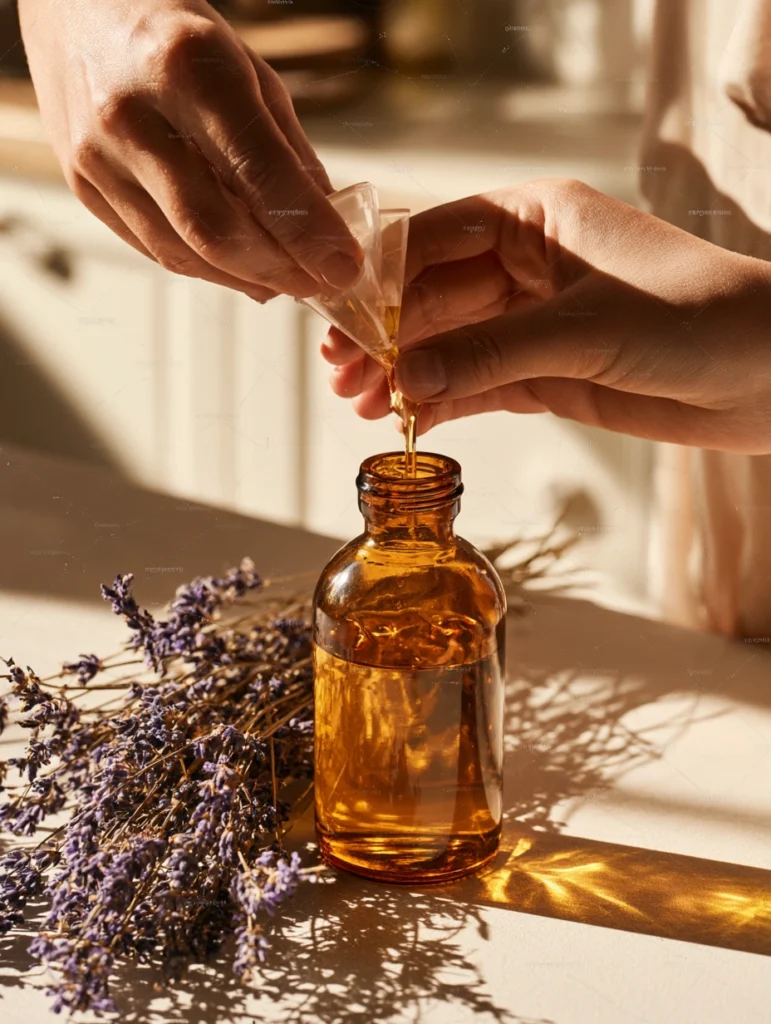
Using a funnel, transfer your finished lavender oil into a clean, completely dry bottle. Dark amber or cobalt glass bottles are particularly useful because they reduce the oil’s exposure to light. Write the preparation date and carrier oil used on a label. Store the bottle somewhere cool, dry, and away from direct sunlight or heat. Because shelf life largely depends on the carrier oil you choose, watch for changes in smell, color, or texture. If your oil develops an unpleasant or rancid smell, discard it.
Quick Method: How To Make Lavender Oil With Heat
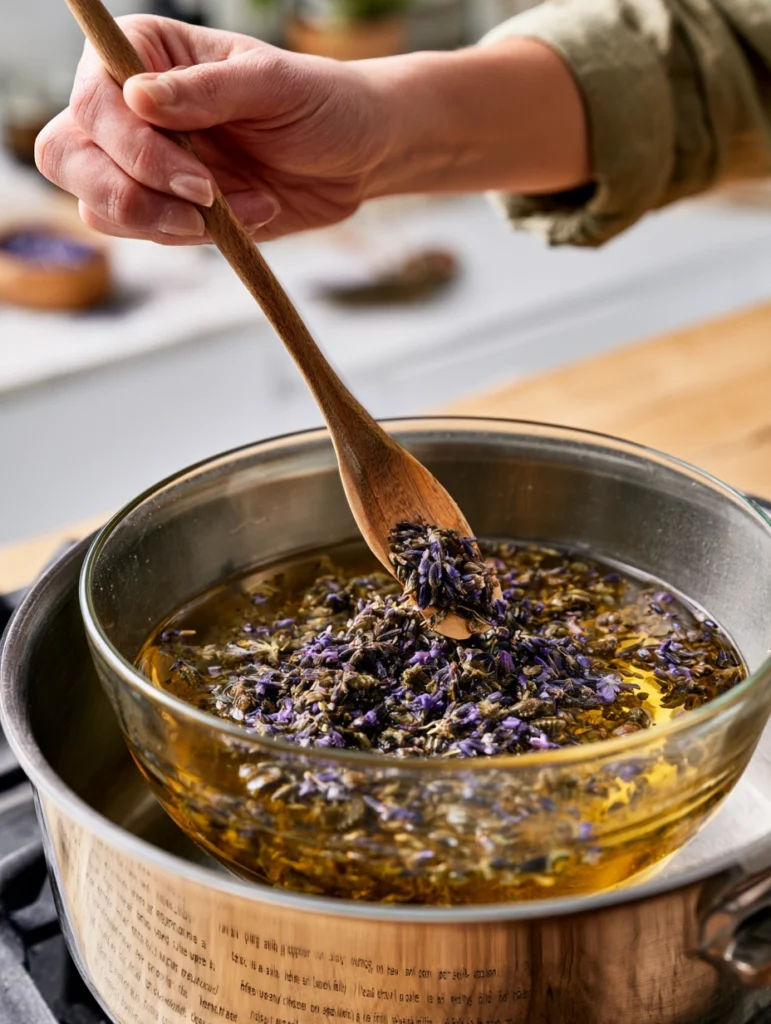
Don’t want to wait several weeks? A warm infusion can speed things up considerably. Place dried lavender and your carrier oil into a heat-safe container or double boiler. Make sure the flowers remain covered with oil. Warm the mixture using very gentle heat for approximately 1–3 hours, stirring occasionally. The oil should remain warm rather than frying, simmering, or smoking. After the infusion, allow the mixture to cool completely. Strain through cheesecloth and transfer the finished oil into a clean dark glass bottle. While this method is considerably faster, the slow method is perfect when you aren’t in a hurry.
If making your own lavender oil has inspired you to grow more useful plants at home, explore these 15 Amazing Indoor Herb Garden Ideas for beautiful and practical ways to keep fresh herbs within reach.
How to Use Homemade Lavender Oil
Once you know how to make lavender oil, you’ll probably discover plenty of reasons to keep a bottle around your home.
Try using it as:
- Body oil
- Massage oil
- Cuticle oil
- Ingredient in homemade body butter
- Ingredient in homemade salves and balms
- Addition to DIY soap recipes
- Bath or body-care ingredient
- Homemade gift
You can also pour lavender oil into an attractive amber bottle, add a handwritten label, and turn it into a charming homemade gift. For skin use, patch-test a small area first, especially if you have sensitive skin or allergies.
Love growing ingredients yourself? You can also learn How to Grow Bell Peppers Indoors and enjoy fresh homegrown peppers even when you don’t have a large outdoor garden.
Common Mistakes When Making Lavender Oil
Making lavender oil is easy, but several small mistakes can affect the final result.
Using Wet Lavender
This is probably the most important mistake to avoid. Using completely dried lavender reduces the amount of moisture introduced into the oil and therefore lowers the risk of spoilage.
Leaving Flowers Above the Oil
Try to keep all of the lavender submerged rather than leaving pieces floating above the oil.
Using a Wet Jar
Your jar, lid, strainer, and storage bottle should all be clean and thoroughly dry before coming into contact with the infusion.
Overheating the Oil
If you’re using the warm method, more heat doesn’t necessarily mean better results. Keep the temperature gentle and never allow the oil to fry or smoke.
Storing the Oil in Direct Sunlight
Once your lavender oil is finished, protect it from heat and direct sunlight. A dark bottle stored in a cool cupboard is a convenient option.
Lavender is perfect for creating a relaxing fragrance around your home. For even more natural and cozy ideas, discover How to Make Your House Smell Amazing with simple tricks you can try throughout your space.
Can You Make Lavender Oil With Fresh Lavender?
Fresh lavender can be used in some infusion techniques, but it introduces significantly more moisture than dried flowers. For beginners, fully dried lavender is the easier and more reliable choice for homemade infused oil. If you’ve just harvested your lavender, dry it thoroughly before beginning your infusion.
How Long Does Homemade Lavender Oil Last?
The shelf life of your homemade lavender oil depends primarily on the carrier oil, storage conditions, cleanliness during preparation, and whether moisture entered the mixture. Some properly prepared infused oils may remain good for many months. Instead of relying solely on a date, regularly inspect your oil. Discard it if you notice mold, unusual cloudiness, an unpleasant odor, or the characteristic smell of rancid oil. Keeping the finished oil in a clean dark bottle in a cool location helps protect its quality.
How To Make Lavender Oil Smell Stronger
If your first batch smells weaker than expected, don’t assume you’ve done something wrong. Lavender-infused oil naturally has a much softer aroma than concentrated lavender essential oil. To create a stronger infusion, try using more dried flowers or strain the first batch and infuse the oil with a second batch of fresh dried lavender. Choosing a relatively neutral-smelling carrier oil, such as jojoba or grapeseed, can also allow the lavender fragrance to stand out more clearly.
Frequently Asked Questions About How To Make Lavender Oil
How do you make lavender oil at home?
Fill a clean, dry jar about halfway with dried lavender flowers, completely cover them with your chosen carrier oil, seal the jar, and allow it to infuse for about 2–4 weeks. Strain the flowers and transfer the finished oil into a clean dark bottle.
What oil is best for making lavender oil?
Jojoba, sweet almond, grapeseed, sunflower, and olive oil can all work. The best choice depends on how you intend to use the finished product.
How long should lavender sit in oil?
A slow lavender infusion can steep for approximately 2–4 weeks, although some methods allow 4–6 weeks for a stronger infusion.
Can you make lavender oil from dried lavender?
Yes. In fact, completely dried lavender is particularly convenient for homemade oil infusions because it contains much less moisture than freshly harvested flowers.
Do you have to dry lavender before making oil?
Drying is highly recommended for a simple home infusion because water from fresh plant material can increase the risk of spoilage.
Is homemade lavender oil the same as lavender essential oil?
No. Homemade lavender-infused oil consists of lavender steeped in a carrier oil. True lavender essential oil is a concentrated product typically created through steam distillation.
Final Thoughts About How To Make Lavender Oil
Learning how to make lavender oil is one of those DIY projects that sounds complicated until you actually try it.
All you really need is completely dried lavender, a carrier oil, a clean jar, and patience. Fill your jar with lavender, cover the flowers with oil, let everything infuse for several weeks, strain it, and bottle your beautifully fragrant creation.
Once you’ve mastered the basic method, experiment with different carrier oils or even perform a second lavender infusion to create a stronger aroma.
It’s an easy way to transform a handful of dried lavender into something beautiful and useful — and your kitchen will look pretty lovely while you’re making it, too.